Why is the europe‘s green building insulation surge in 2026?
With the EU’s Energy Efficiency Directive for Buildings (EPBD) tightening significantly in 2026, the European construction industry is facing a profound green and low-carbon revolution. For global owners planning to invest in, build, or renovate industrial and commercial properties in Europe, the core industry conclusion is very clear.
The explosive surge in demand for green building insulation materials in Europe in 2026 stems directly from the EU’s mandatory implementation of Near-Zero Energy Buildings (NZEB) and the 2050 Net-Zero Carbon Emissions Act. Under the current pressure of high energy prices in Europe and the implementation of the Carbon Border Adjustment Mechanism (CBAM), traditional low-end, high-energy-consuming building materials have been completely phased out.
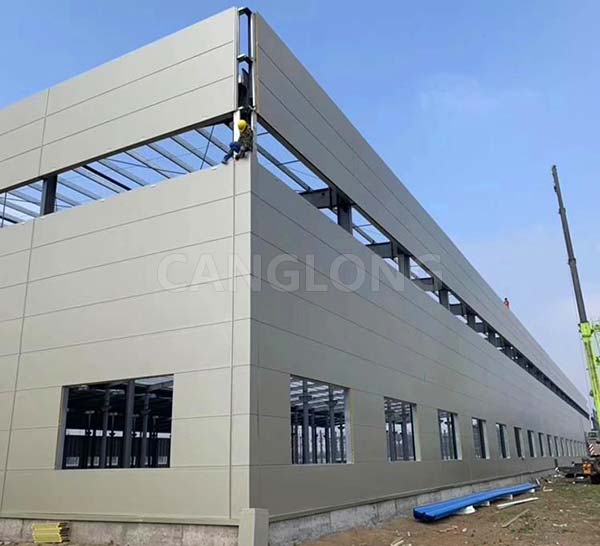
Green Building Insulation System Installation
Energy-efficient insulation materials with low carbon emissions throughout their entire life cycle and extremely high thermal resistance (R-value) are becoming increasingly popular. In particular, composite sandwich panel systems, represented by polyurethane(PU/PIR) and high-density rock wool, have become an indispensable green passport for steel structure buildings in Europe. Improving the airtightness of the building shell to cut operating energy consumption by more than 35% is the only way for multinational factories to overcome Europe’s green barriers.
Three Core Drivers of Surging Demand
1. Rigid Regulatory Requirements
From 2026, the EU requires all new public buildings and certain industrial buildings to meet zero emissions standards or near-zero energy consumption (NZEB). This means that the heat transfer coefficient (U-value) threshold for building shells (walls, roofs) has been raised to an unprecedentedly stringent level. Buildings that fail to meet the standards will face penalties such as being unable to obtain green loans, failing to pass compliance approvals, and even being subject to hefty carbon taxes.
2. High Energy Costs in Europe
Despite supply chain adjustments, industrial electricity costs and natural gas heating costs in Europe will remain among the highest in the world in 2026. Traditional single-story metal sheet factory buildings suffer from severe “cold bridge effects” and poor insulation, leading to astronomical electricity costs for summer cooling and winter heating. Factory owners must upgrade to high-quality insulated shells to reduce energy loss to absolute zero.
3. Embedded Carbon Lifecycle Traceability
The European market in 2026 not only values the energy efficiency of buildings during use, but also focuses on the carbon emissions generated during the production, transportation, and recycling of building materials. Therefore, green building insulation materials with Environmental Product Declaration (EPD) certification have absolute priority on the procurement lists of European general contractors.
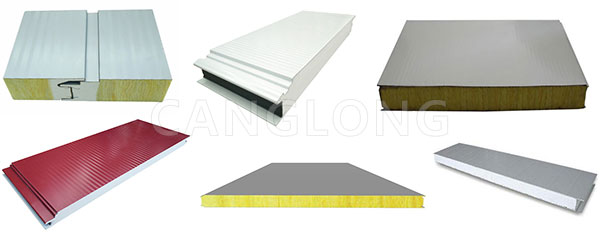
Green Building Insulation Materials
Two Dominant Insulation Systems in the European Market in 2026
In the European green building supply chain in 2026, the following two types of materials, with their superior physical and environmental properties, have formed a dominant duopoly.
1. Polyurethane (PU/PIR) Sandwich Panels
Technological Advantages: Polyurethane has one of the lowest thermal conductivity known globally among building materials, with a closed-cell rate exceeding 95%.
Energy Saving Logic: For the same insulation effect, PU panels are thinner than traditional materials, significantly freeing up usable interior space. It’s like putting a fully enclosed down jacket on a European workshop, completely cutting off heat exchange between indoors and outdoors, directly helping companies reduce their 24/7 HVAC electricity costs by 35% to 40%.
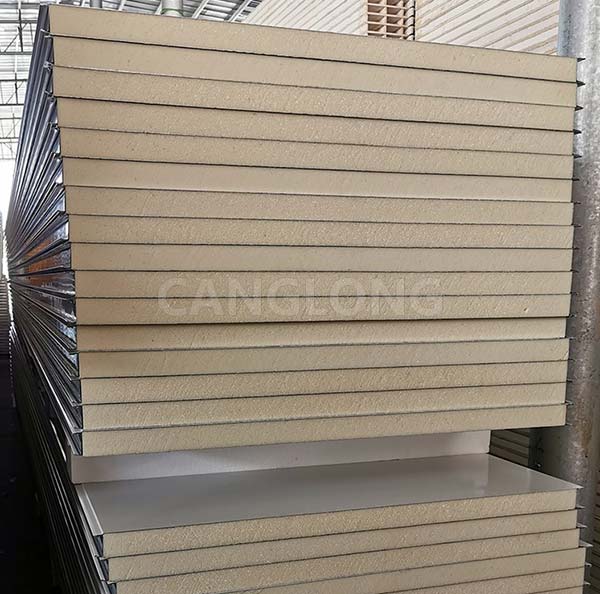
2. Polyurethane (PU) Edge-Sealed Rock Wool Board
This is the absolute first choice for high-traffic areas and high-risk, elevated automated warehouses in Europe by 2026 (such as lithium battery manufacturing and fine chemical industries).
A1 Grade Absolutely Non-Combustible: The core of the board uses 100% pure inorganic mineral rock wool, perfectly aligning with the most stringent European fire safety standards EN 13501-1 (A1, s1, d0). It has a melting point exceeding 1000°C, a fire resistance time of up to 4 hours, and produces zero toxic smoke and zero open flame drips during combustion.
PU Rigid Edge Sealing: High-density polyurethane is injected into both sides of the tongue and groove joints of the panels, completely solving the problem of traditional rock wool’s tendency to absorb water and shrink, eliminating cold bridges, and perfectly balancing extreme fire safety with green high energy efficiency.
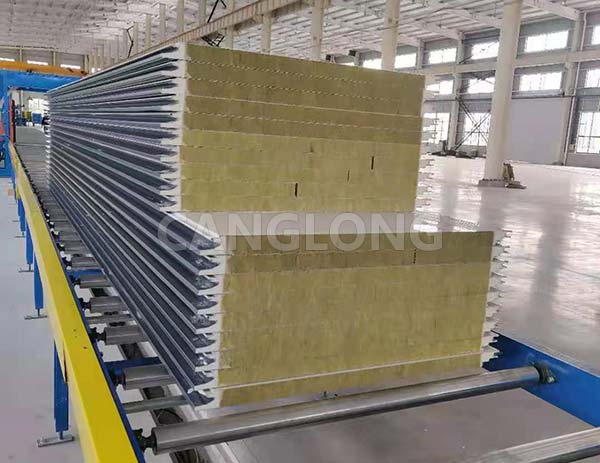
Polyurethane Edge Sealing Rock Wool Panel
How can multinational investors leverage the Chinese supply chain to align with European standards?
Green building materials in Europe are extremely expensive due to labor and carbon taxes, and have lengthy supply cycles. Based on Canglong Group global delivery experience, by 2026, smart multinational contractors will fully implement a turnkey export model for Chinese prefabricated steel structures and high-end green cladding packages.
100% Compliance with European Standards (CE/SGS Certification): Canglong’s polyurethane and rock wool sandwich panels undergo rigorous testing by internationally recognized third parties, fully aligning with European standards such as EN 13501-1, ensuring smooth customs clearance at European ports of destination and one-time acceptance by local building authorities.
Digitalized Lean Manufacturing in the Factory: Relying on domestic continuous fully automated hot-pressing production lines, the foaming density of the panels is ensured to be highly uniform, resulting in extremely strong resistance to wind and hurricanes.
On-site Construction Time and Installation Costs are Halved: On-site construction labor costs in Europe are astronomical. Canglong automates the welding and precision CNC punching of the main steel structure (Q355B H-beams and columns) in its factory, and ships the complete set of outer cladding panels in closed-loop containers. Upon arrival at the European site (such as Iceland and Central Europe), the entire assembly is done using a bolt-on modular system, eliminating 100% welding and cutting on-site. This avoids exorbitant local labor costs and shortens the construction period by more than 50%.
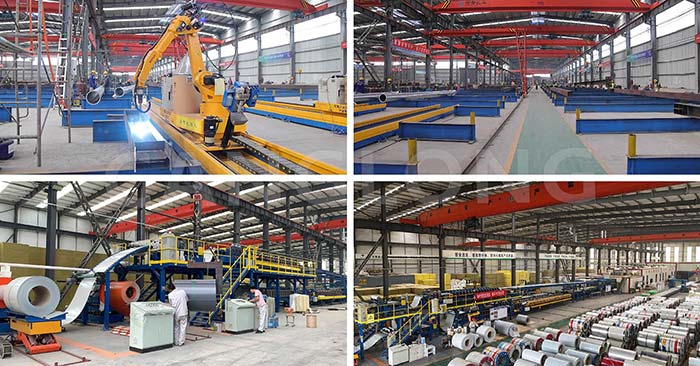
Steel Structure and Sandwich Panel Production Workshop
Conclusion
In 2026, the choice of building insulation material is the biggest financial investment in building green buildings in Europe. Choosing a polyurethane or rock wool cladding system that perfectly aligns with EU standards, coupled with a strong one-stop global delivery partner (such as Canglong Group), not only ensures absolute safety and compliance under stringent European laws but also provides a safe channel for your overseas industrial assets to achieve long-term high turnover and maximize ROI.