
Why are EPS foam roofing panels so popular in Australia?
EPS foam roofing panels offer advantages such as lightweight construction, good insulation, quick installation, and relatively low overall cost, making them suitable for numerous agricultural, warehousing, light industrial, and modular building projects in Australia. However, they are not suitable for all buildings, project selection must be based on local fire codes, building categories, and insurance requirements.
Australia is a vast country with diverse climates, including hot, dry, humid, and cold regions. For steel structure warehouses, farm buildings, and industrial plants, the roof is a major area for solar radiation and heat exchange between indoors and outdoors. Therefore, EPS sandwich roofing panels, which combine a metal roof, insulation core, and interior surface layer, have become a practical choice for some cost-sensitive projects.
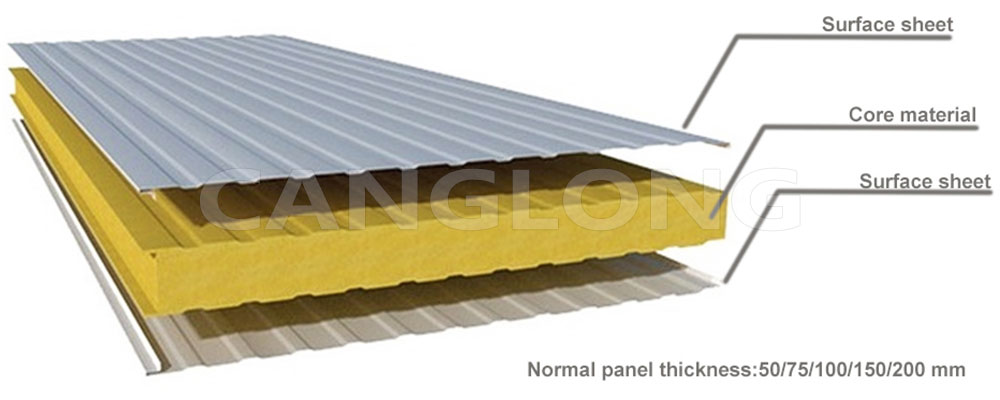
EPS Foam Roofing Panel Structure
What are EPS foam roofing panels?
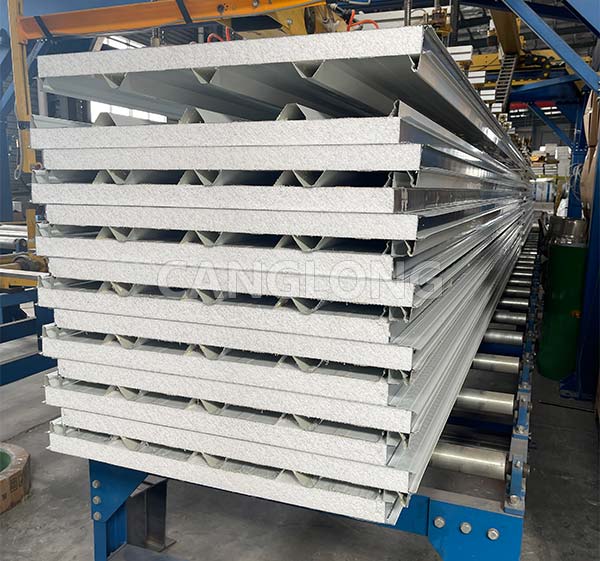
EPS foam roofing panels are a type of metal-faced sandwich panel, typically composed of:
- Outer layer: Color-coated steel sheet or galvanized steel sheet;
- Middle layer: EPS polystyrene foam core;
- Inner layer: Metal panel;
- Overlap joints and matching sealing system.
The panels are continuously composite-formed in the factory and, upon arrival at the site, are directly fixed to the steel structure purlins, simultaneously completing roofing, insulation, and interior decoration.
1. Adaptable to Australia Diverse Climate
Many regions in Australia experience intense summer sunshine, causing metal roofs to easily absorb large amounts of heat. EPS core material slows heat transfer from the roof to the interior, helping to improve the indoor environment of warehouses, workshops, and agricultural buildings.
By appropriately selecting panel thickness, roof color, ventilation, and sealing solutions, cooling loads can be reduced, lowering long-term building energy consumption.
In the cooler southern regions, EPS roof panels can also reduce heat loss during winter.
2. Easier Overall Cost Control
EPS sandwich panels are generally more economical and suitable for large-area roofing projects.
Compared to multi-layer systems that involve laying corrugated steel sheets, insulation, and inner lining panels on-site, EPS roof panels integrate multiple functions into a single panel, reducing:
- Types of materials procured;
- On-site construction procedures;
- Installation labor input;
- Project coordination costs.
Therefore, EPS foam roofing panels offer a good balance between insulation performance and initial investment for agricultural warehouses, general logistics warehouses, and light industrial buildings.
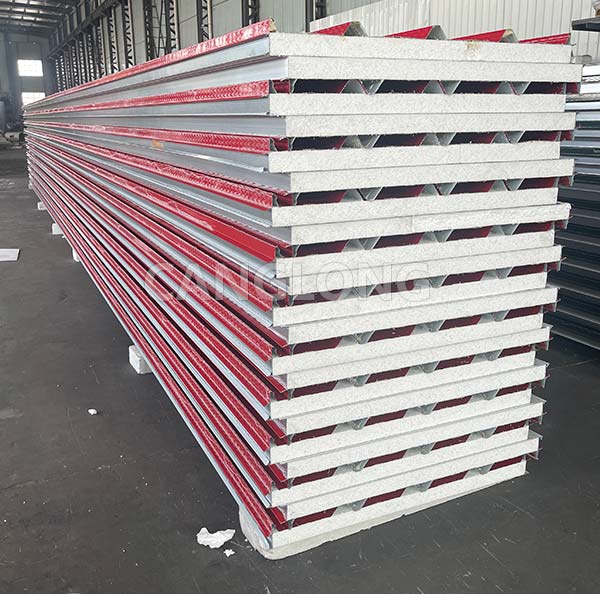
3. Lightweight, Suitable for Prefabricated Steel Structure Buildings
EPS core material has a low density, resulting in a lighter overall weight and minimal load on the steel structure.
This characteristic makes it ideal for:
- Portal steel frame warehouses;
- Agricultural buildings;
- Modular buildings;
- Temporary or expandable buildings;
- Light industrial plants.
The lighter panels also facilitate transportation, hoisting, and on-site handling, improving construction efficiency.
4. Fast Installation
Labor costs are high in the Australian construction industry, making minimizing on-site work time crucial.
EPS foam roof panels utilize a factory prefabrication and modular overlapping design, allowing for rapid on-site installation according to numbered panels. Once the panels are fixed and the joints sealed, a relatively complete insulated roof is formed.
Fast installation helps customers:
- Shorten project timelines;
- Reduce time spent working at heights;
- Reduce labor costs;
- Earlier operation.
5. Suitable for Large-Scale Agricultural and Warehousing Projects
The Australian agricultural, livestock, and regional logistics markets have a significant demand for low-rise, large-span buildings. These projects typically prioritize practicality, construction speed, and overall cost.
EPS foam roofing panels are commonly found in:
- Agricultural product warehouses;
- Agricultural machinery and equipment warehouses;
- Feed warehouses;
- General logistics warehouses;
- Light industrial workshops;
- Modular office and auxiliary buildings.
Their smooth interior surface also improves the building’s aesthetics and facilitates daily cleaning and maintenance.
6. Can be Integrated with Photovoltaic Roofing Plans
Australia has a mature rooftop photovoltaic market. For industrial buildings planning to install solar modules, photovoltaic loads, purlin spacing, fixing points, and waterproofing solutions can be considered concurrently during the steel structure and roofing design phases.
It is important to note that the load of the photovoltaic modules should not be borne solely by the sandwich panels but should be transferred to the main steel structure through a calculated support and connection system.
Are EPS Foam Roofing Panels Suitable for All Australian Projects?
No.
EPS is a flammable foam material. Even when using flame-retardant EPS, it cannot be simply equated with non-combustible core materials such as rock wool. For buildings with high fire safety requirements, high population density, or storage of high-value or flammable materials, rock wool, PIR, or other certified enclosure systems should generally be prioritized.
Before selecting EPS foam roofing panels, the following should be confirmed:
- Building purpose and category;
- Local fire and building codes;
- Testing and certification documents for the panel system;
- Insurance company material requirements;
- Fire compartment and fire protection system design;
- Additional risks associated with photovoltaic systems.
For food processing plants, chemical warehouses, data centers, and high-value logistics facilities, roofing materials should not be selected solely based on price.
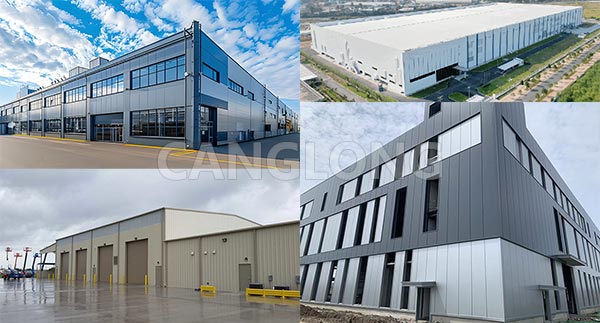
How to choose the right EPS roofing panels for your project?
It is recommended to focus on confirming the following:
- Temperature and humidity at the project site;
- Required insulation rating;
- Roof span and purlin spacing;
- Wind load and cyclone zone requirements;
- Fire rating and insurance requirements;
- Steel sheet thickness and anti-corrosion coating;
- Joint airtightness and waterproofing design;
- Whether a photovoltaic system is required.
In coastal or highly corrosive environments, appropriate metal coatings should be selected based on project conditions, and corrosion protection treatments for cuts, fasteners, and overlaps should be strengthened.
Conclusion
EPS foam roofing panels are popular in Australia primarily due to their economic advantages, lightweight construction, thermal insulation performance, and rapid installation. They offer competitive roofing solutions for agricultural buildings, general warehouses, light industrial plants, and modular projects.
However, material selection must prioritize building safety and local compliance requirements. Only through proper structural design, panel selection, joint treatment, and fire safety assessments can EPS roof panels truly realize their cost and efficiency advantages.
Canglong Group provides global clients with a variety of roofing cladding solutions, including EPS, PU/PIR, rock wool, silica rock, magnesium oxide, and PU-sealed rock wool, tailored to project purpose, climate conditions, building codes, and investment budgets. These solutions are accompanied by prefabricated steel structure design, manufacturing, transportation, and installation guidance services.