
Rock Wool vs PU Edge-Sealed Rock Wool: Which one should you specify?
Rock wool sandwich panels have always been an important cladding material in steel structure factory, warehouses, logistics centers, food processing plants, and commercial buildings. However, as global requirements for fire safety, energy efficiency, moisture resistance, and building lifespan continue to increase, more and more projects are focusing on an upgraded solution: PU Edge-Sealed Rock Wool Panels.
So, what are the differences between PU Edge-Sealed Rock Wool Panels and traditional rockwool sandwich panels? They are not simply a matter of new and old products, but rather two solutions tailored to different building needs. The real question isn’t “Which is better?”, but rather “Which is more suitable for my building?”
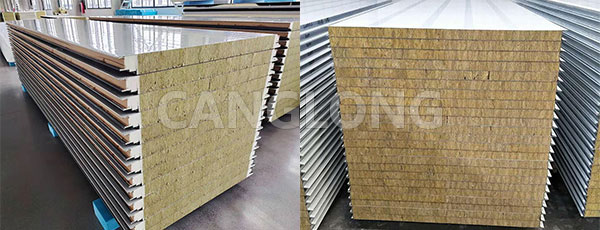
1. Basic structure of the two types of rock wool panels
Ordinary rock wool sandwich panels typically consist of a “metal sheet + rock wool core + metal sheet”.
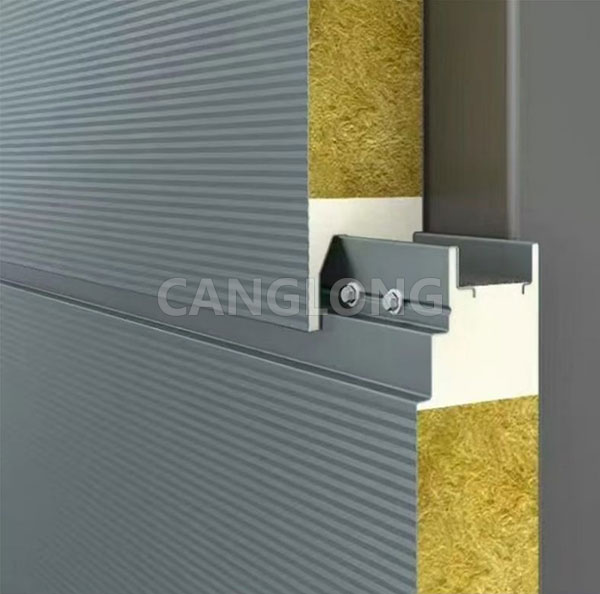
Rock wool itself possesses excellent fire resistance, sound absorption, and thermal insulation properties, making it widely used in industrial plants, warehouses, public buildings, and other projects requiring fire resistance. PU-sealed rockwool sandwich boards, on the other hand, are based on a rock wool core material with PU edge sealing applied to the edges.
In other words, the core material remains rockwool, but the edges and connection areas are upgraded. PU edge sealing reduces direct exposure of the rock wool core material at the edges, thereby improving sealing, moisture resistance, and thermal bridge control at board joints.
Industry data also indicates that the main value of PU-sealed rock wool board is not to replace the fire resistance of rock wool, but rather to achieve a better overall balance between fire resistance, thermal insulation, moisture resistance, and sealing.
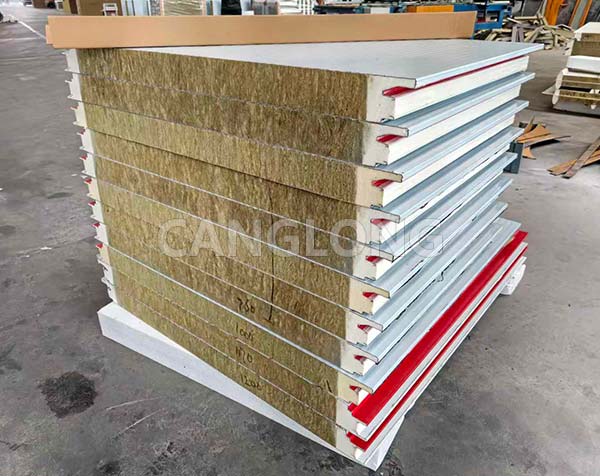
2. Fire Resistance
If fire resistance is the primary concern for a project, rock wool core material has a clear advantage. Rock wool is an inorganic mineral fiber material, frequently used in building fire protection systems for scenarios requiring high fire resistance or non-combustible properties.
- Ordinary rock wool sandwich panel: Suitable for industrial buildings, warehouses, public buildings, etc., with high fire resistance requirements.
- PU-sealed rock wool board: Still using rock wool as the primary fireproof core material, while improving the overall sealing performance of the board through edge sealing.
However, a crucial procurement principle is crucial, don’t just look at the supplier’s labeling, such as “Class A” or “A1”. Different countries and regions use different testing standards, and the final building requirements also differ.
For example, the EU building products market is currently affected by the new Construction Products Regulation (EU) 2024/3110 framework, making product performance, technical documentation, traceability, and related declarations increasingly important.
Therefore, when procuring for overseas projects, suppliers should be required to provide:
- Fire classification
- Fire test report
- Thermal conductivity
- Panel density
- Mechanical performance
- Relevant local/international standards
- Product Declaration / Technical Documentation
The truly valuable information is not just a label like “fireproof rock wool board,” but complete and verifiable performance data.
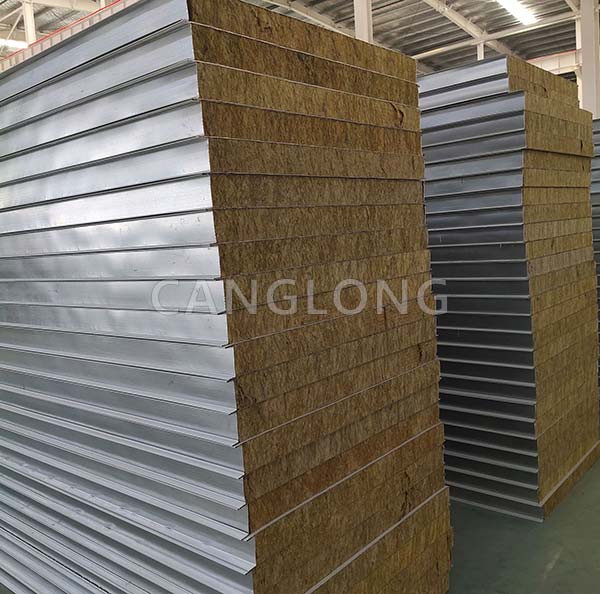
3. Thermal Insulation
Many customers believe that rockwool itself has thermal insulation properties, so simply increasing the thickness is sufficient. However, the actual thermal insulation performance of a building is not solely determined by the core material. It is also affected by factors such as panel joints, overlap methods, fasteners, door and window joints, roof ridges, wall corners, eaves, wall penetrations, and sealing materials.
The technical guidelines for rock wool sandwich panels also emphasize that the air-tightness and proper sealing of the joints are crucial for building energy performance. This is also one of the core values of PU-sealed rock wool panel.
By sealing the edges of the rock wool with PU, the ingress of air and moisture at the edges can be reduced, and the continuity of the panel joint area can be improved.
Therefore, edge sealing and joint design are particularly important for buildings in high-temperature regions, cold regions, high-humidity regions, factories using air conditioning for extended periods, food processing plants, and buildings with strict requirements for indoor temperature and humidity.
4. Moisture Proof
One of the biggest potential problems with ordinary rockwool sandwich panel is not the rockwool itself, but how to protect the edges and joints.
Rock wool is a fibrous material. If the edge treatment, transportation, cutting, or on-site installation of the panels is improper, moisture may enter the core material area. If the building is exposed to a humid environment for a long time, it may affect the thermal insulation performance, weight, and long-term stability.
The idea behind PU edge sealing is to protect the edges of the rock wool, creating a more continuous, closed edge and reducing the risk of moisture and air entering the core material. This is particularly worth considering for coastal buildings, humid areas, food factories, cold chain buildings, and high-humidity industrial environments.
However, it’s important to note that PU edge sealing cannot replace a complete waterproofing design. True waterproofing performance depends on the combination of “board material + joints + sealant + fasteners + flashing + roof drainage system + installation quality.” Therefore, it cannot be simply assumed that PU edge sealing will prevent leaks.
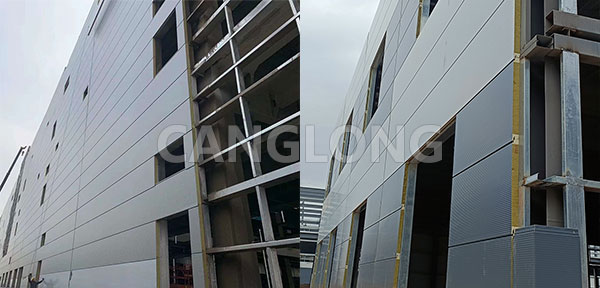
5. Structural Performance
For steel structure buildings, sandwich panels are not isolated entities. They form a complete enclosure system with “main steel frame → purlins → wall beams → sandwich panels → fasteners.”
The density, thickness, and structural form of different rock wool boards will affect the weight of the boards and the requirements for purlins and wall beams during installation. Generally, rockwool systems are heavier than PU foam sandwich panels. Therefore, project design needs to consider panel weight, wind load, snow load, span, purlin spacing, and fastener type together.
Especially for large-span industrial buildings, it’s not enough to simply compare “the price per square meter of panels.” Instead, compare “the total cost of the entire enclosure system.”
6. Cost Comparison of Rock Wool Sandwich Panels and PU-Sealed Rock Wool Boards
This is a point that clients often overlook during procurement.
| Cost & Performance Factor | Standard Rock Wool Sandwich Panel | PU Edge-Sealed Rock Wool Panel |
|---|---|---|
| Material Cost | More cost-effective | Usually higher |
| Fire Performance | Excellent | Excellent |
| Edge Sealing | Standard edge treatment | Enhanced edge sealing |
| Moisture Resistance | Depends on joints and installation | Better edge protection |
| Thermal Bridge Control | Depends on structure and joints | Improved at panel edges |
| Installation | Standard installation requirements | Requires compatible detailing |
| Long-Term Maintenance | Depends on installation quality and environment | Potential maintenance advantages |
| Overall Performance | Cost-effective fire-resistant solution | Upgraded overall building envelope performance |
Therefore, what should truly be compared is “Initial Cost + Installation Cost + Energy Cost + Maintenance Cost,” that is, “initial purchase cost + installation cost + building operation energy consumption + subsequent maintenance cost.” For an industrial building with a lifespan of over 20 years, simply comparing prices per square meter may not represent the true investment cost.
7. How to Choose Rock Wool Panels for Different Projects?
A very simple logic can be used. If your project prioritizes:
- Fireproofing
- Standard insulation
- Cost control
- Standard industrial plant
- Ordinary warehouse
- No particularly high requirements for edge sealing
Then ordinary rockwool sandwich panels may be sufficient to meet the project’s needs.
If your project prioritizes PU-edged rock wool board for the following reasons:
- High fire resistance
- Better edge sealing
- Moisture resistance
- Thermal bridge control
- Long-term insulation performance
- High humidity environments
- Higher building envelope performance
Then PU-edged rock wool panels are a strong contender. Especially for food processing plants, logistics centers, high-standard industrial plants, clean spaces, commercial buildings, and buildings in high-humidity areas.
8. Don’t confuse wall panels with roofing
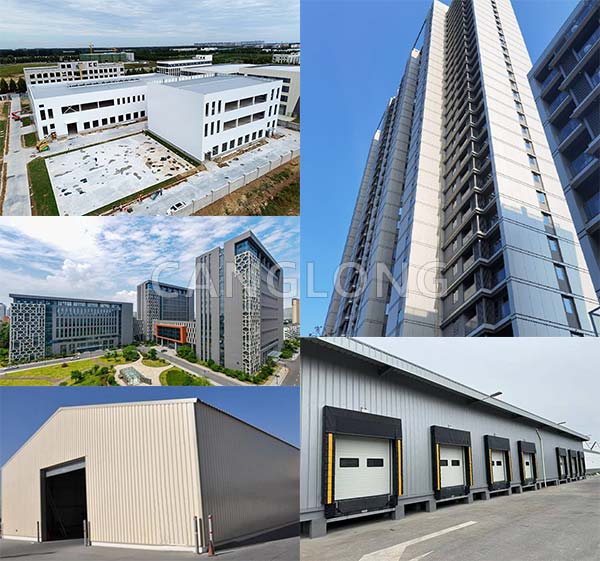
In the same project, not all areas need to use the exact same panels. For example, an industrial plant can be configured according to the function of different areas.
Exterior walls: PU-edged rock wool panels.
Roofing: Choose a suitable roofing system based on local wind and snow loads, insulation requirements, and drainage design.
Fire compartments: Choose an enclosure system that meets fire resistance requirements according to local fire codes.
Cold storage: Focus on insulation, air-tightness, joints, and anti-condensation design in low-temperature environments.
This is actually a trend in modern building material selection. From choosing a single panel material to designing an entire building envelope system.
9. What’s changing in the global market?
From a global construction industry perspective, building projects are increasingly focusing not only on “whether it can be built,” but also on “safety + energy efficiency + lifecycle + compliance.” Mature markets like Europe are strengthening performance verification and market transparency for building products through building product regulations and performance declaration systems.
Meanwhile, industrial buildings, logistics warehouses, food processing plants, cleanrooms, and temperature-controlled buildings are placing increasingly comprehensive demands on building envelope systems. This means that future sandwich panel procurement will gradually shift from “Which panel is cheaper?” to “Which panel gives the right performance for my building?”
This is one reason why PU-sealed rock wool panels are gaining attention. It’s not simply about piecing PU and rock wool together; it’s about addressing the practical problems of traditional rock wool panels in terms of edge sealing, moisture resistance, thermal bridging, and overall envelope performance.
10. The final choice
Ordinary rock wool sandwich panels are more suitable for projects with fire resistance and standard insulation as their core requirements. PU-sealed rock wool panels are more suitable for projects that simultaneously prioritize fire resistance, thermal insulation, moisture resistance, and long-term cladding performance.
However, the final solution needs to be determined comprehensively based on factors such as local climate, fire safety regulations, building purpose, wind and snow load, insulation requirements, humidity levels, service life, and total cost.
For steel structure projects, no single sandwich panel is suitable for all buildings. A truly professional approach is not to recommend the “most expensive panel” to clients, but rather to select a cladding system that matches performance and cost based on the building’s actual usage environment.
Because good building material selection is not simply about reducing procurement prices, but about considering safety, energy consumption, maintenance, and return on investment throughout the entire building lifecycle.