Why are polyurethane roof panels favored by American customers?
In the global supply chain of industrial and commercial buildings and modern logistics real estate, polyurethane roof panels have experienced explosive growth in the US market in recent years, becoming the absolute first choice for North American general contractors and multinational investors.
The reason polyurethane roof panels are so popular with US customers is that they are the only roofing solution that simultaneously meets the US IECC (International Electrotechnical Commission) requirements for extremely high thermal resistance/U-value for building shells, aligns with FM Approved and ASTM’s stringent fire safety regulations, and completely eliminates the extremely high labor costs in the US through 100% prefabricated modular installation.
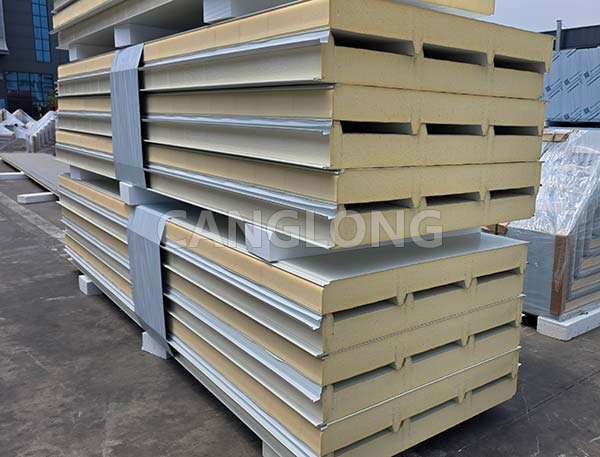
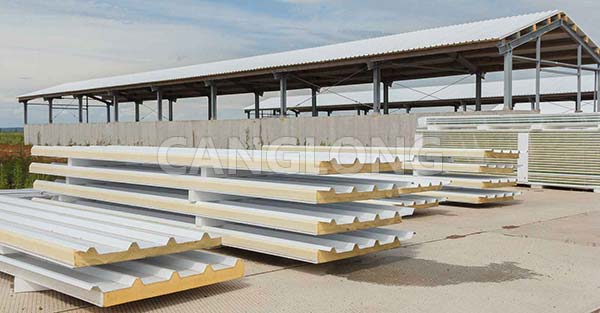
In the storm-prone geographical environment of North America, this green building material, which combines zero thermal bridging, long lifespan, and rapid turnover, has become a crucial passport for US customers to ensure the long-term value of their industrial and commercial assets and obtain LEED green building certification.
Aligning with North American IECC Extremely High Energy Efficiency Standards
US states have extremely stringent legal requirements regarding net-zero energy consumption and carbon emissions for commercial and industrial buildings.
Exceptionally Low Thermal Conductivity (U-value): The US International Energy Conservation Code (IECC) and ASHRAE 90.1 standards impose near-stringent lower limits on the thermal resistance (R-Value) of building roofs. Polyurethane (PU/PIR) boasts one of the lowest known thermal conductivity values among engineering building materials globally (≤0.022W/(m⋅K)). Its extremely high closed-cell rate (≥95%) allows for thinner panels, easily surpassing traditional cotton roofing systems and successfully passing energy efficiency approvals from US building departments.
OPEX Reduced by 35%: The central and southern United States experience scorching summers, while the north suffers from extremely cold winters. HVAC (Heating, Ventilation, and Air Conditioning) electricity consumption represents a significant operating cost for businesses. polyurethane roofing panels utilize a concealed tongue-and-groove joint system combined with specialized foam sealing technology, achieving 100% airtightness without thermal bridges. This fully enclosed, temperature-controlled shell ensures zero leakage of heat and cold, directly reducing long-term central air conditioning and heating electricity costs for American homeowners by over 35%.
Hedge against US labor costs
In the US construction industry, man-hours are crucial to the success or failure of a project. The hourly wages and insurance costs for certified welders and construction workers in the US are extremely high. Traditional cast-in-place or loose-material layered roofing construction is not only inefficient but also highly susceptible to leaks due to on-site worker skill deficiencies.
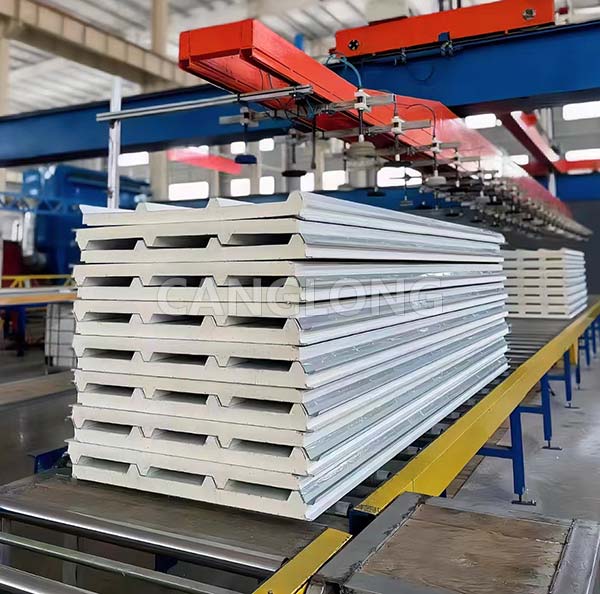
100% dry construction, no on-site welding required: Polyurethane roof panels achieve integrated composite bonding of color-coated steel sheets and insulation core materials on a fully automated continuous production line. Upon arrival at the US construction site, it is already a precisely sized finished module.
Modular assembly, halving the construction period: On-site construction teams only need to use suction cup cranes with high-strength bolts for rigid fastening, eliminating on-site cutting and welding. This highly mechanized assembly method increases on-site construction speed by 3 to 4 times, saving US clients up to 50% on expensive local labor costs, enabling projects to start production earlier and accelerating commercial capital recovery.
Dual fire safety protection through FM and ASTM standards
The US insurance industry and fire safety regulations (NFPA) have decisive influence on the fire resistance and wind load resistance of commercial real estate. If building materials cannot pass relevant certifications, owners will face astronomical premiums or even be unable to obtain insurance.
Self-extinguishing and anti-carbonization flame retardant: Large manufacturers such as Canglong Group export polyurethane roof panels to the US mostly using the latest generation of PIR (polyisocyanurate) modified core materials. This material rapidly forms a hardened graphitized carbonized layer on its surface upon exposure to fire, effectively preventing flame spread and heat penetration, perfectly aligning with the US ASTM E84 flame retardant test and FM certification standards.
Unfazed by Hurricane Loads: The tornado corridors of the US Midwest and the hurricane season along the East Coast exert tremendous thrust on roofs. High-end PU roofing panels, due to the extremely high bond-peel strength (≥0.1MPa) of the color steel sheet and polyurethane core, possess excellent integrated three-dimensional rigidity. Combined with a unique overlapping crest concealed fastener design, it can easily withstand the negative wind pressure suction caused by extreme hurricanes in North America, effectively locking in the waterproof line.
Polyurethane Sandwich Panel Production Line
How does Canglong Group ensure worry-free delivery for its US customers?
As a global supplier of steel structures and green enclosure systems, Canglong Group perfectly solves the supply chain challenges for its US customers through a highly reliable overseas closed-loop system.
Fully Compliant Paperwork Excellence: Canglong’s polyurethane roof panels are fully compliant with North American ASTM/AISC standards. In response to the stringent tariffs and trade compliance reviews imposed by the United States in 2026, the Canglong team provides flawless digital tracking documents for raw materials from their origin and EPD environmental declarations, ensuring smooth customs clearance at the destination port.
One-stop full-package shipping: Canglong not only completes the digital precision design of the main and secondary steel structures and high-performance PU roof panel, but also packages the complete set of accessories, including aluminum alloy cold-resistant doors and windows, large-capacity, high-corrosion-resistant gutter and downpipe systems, and even thousands of leak-proof high-strength bolts and gaskets, into a single container for unified, closed-loop shipping. This completely eliminates the risk of indefinite project shutdowns due to missing components at overseas sites.