
Rock Wool, Polyurethane, or EPS? How to choose the core material for steel sandwich panel?
When constructing steel structure warehouses or factories, choosing the appropriate steel sandwich panel core material is crucial to determining the building’s lifespan, safety, and energy efficiency. Faced with the three most mainstream materials on the market: rock wool, polyurethane (PU/PIR), and EPS (polystyrene), how can users make the best choice based on their needs?
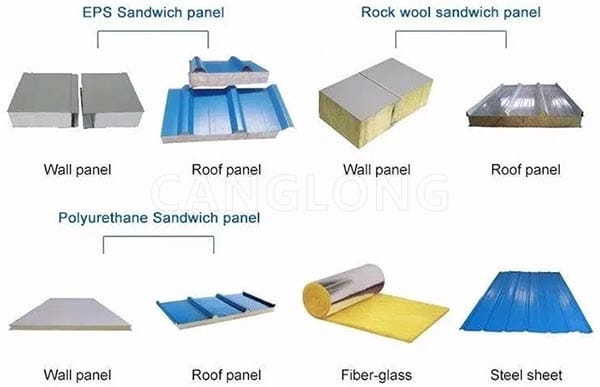
The following is an in-depth comparative analysis for different application scenarios.
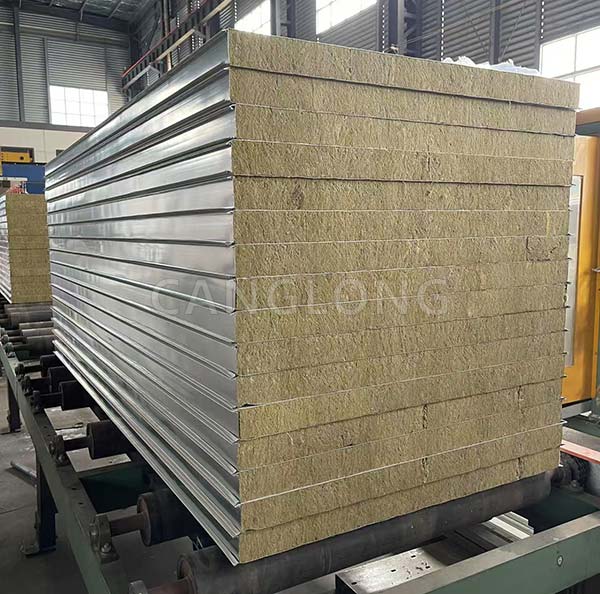
1. Rock Wool
Fire Rating: Class A (non-combustible).
Features: Made from natural rock, with a melting point exceeding 1000°C. It is completely non-combustible and effectively prevents the spread of fire.
Most Suitable Scenarios: Public buildings with extremely high fire resistance requirements, chemical workshops, densely populated production lines, or as fireproof partition walls.
Industry Analysis: Although rock wool has a slightly higher thermal conductivity than PU, its contribution to structural safety is irreplaceable.
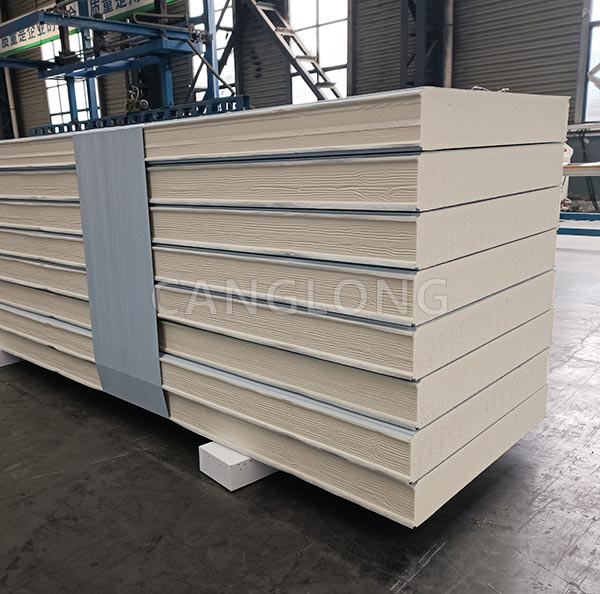
2. Polyurethane (PU/PIR)
Fire Rating: B1/B2 (Flame Retardant). PIR forms a carbonized layer when exposed to fire, without molten dripping.
Features: Possesses the lowest thermal conductivity among current building materials. This means it’s thinner than rock wool for the same insulation performance.
Most Suitable Scenarios: Cold storage, food processing plants, precision electronics warehouses, and high-end industrial real estate with strict energy consumption controls.
Industry Analysis: Globally, PIR is becoming the preferred choice for cold chain logistics and green building due to its significant reduction in long-term operating electricity costs for air conditioning and refrigeration systems.
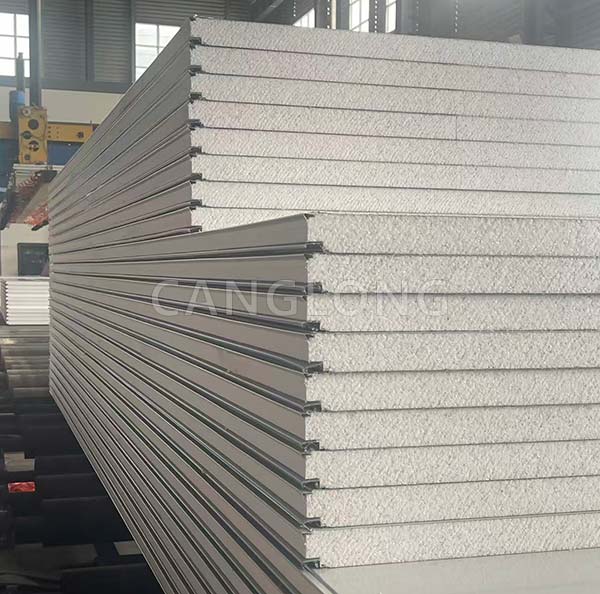
3. EPS (Polystyrene)
Fire Rating: B2 (Flammable/Combustible).
Features: Extremely lightweight material, most competitively priced of the three, with basic insulation properties.
Most Suitable Scenarios: Temporary buildings with limited budgets, mobile homes, simple agricultural product storage warehouses, or areas without special fire protection requirements.
Industry Analysis: While restricted in some permanent buildings in developed countries, EPS still has a market space in projects seeking rapid construction and extreme cost control.
Comparison of Steel Sandwich Panel with Different Core Materials
| Requirement Priority | Preferred Core Material | Reason |
| The primary consideration is fire prevention | Rock Wool | Absolutely non combustible, meeting the strictest fire regulations. |
| The primary consideration is insulation/energy conservation | PU / PIR | Extremely low thermal conductivity, high long-term energy-saving return. |
| The primary consideration is cost/lightweight | EPS | The price advantage is obvious, and the installation speed is extremely fast. |
| Comprehensive performance (fireproof+waterproof+airtight) | Polyurethane edge sealing rock wool | A-level fireproof core material+PU side sealing, the star solution for industrial buildings. |
Canglong Group’s Professional Advice
Based on Canglong Group’s global delivery experience, we recommend:
- Regional Material Selection: In the same warehouse project, you can choose to use PIR for the roof to enhance insulation, while using rock wool for firewalls to meet fire isolation requirements.
- Focus on Compliance: Different countries have different mandatory requirements for fire ratings (such as FM, CE, ASTM, etc.).
- Long-Term Value: Don’t just look at the purchase cost. While high-performance PIR or rock wool boards may have a slightly higher initial investment, the price difference can be recovered within 3-5 years by reducing insurance premiums and energy consumption.
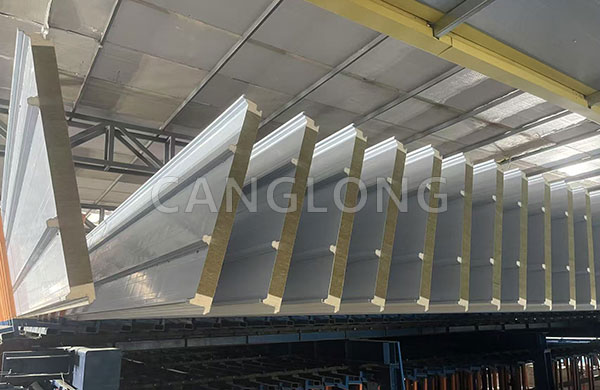
There is no best material, only the most suitable solution for your project.
If you are undecided about a project, Canglong Group’s engineers can provide you with a customized steel sandwich panel material list and cost estimate based on your local fire regulations and climate conditions.