
EPS, PU, PIR, rock wool, who is your best building partner?
In the industrial building market, sandwich panels are no longer just insulation materials. With the development of industrial plants, warehousing and logistics, food processing, cold chain, commercial buildings, and prefabricated buildings, customer requirements for building envelope systems are constantly increasing.
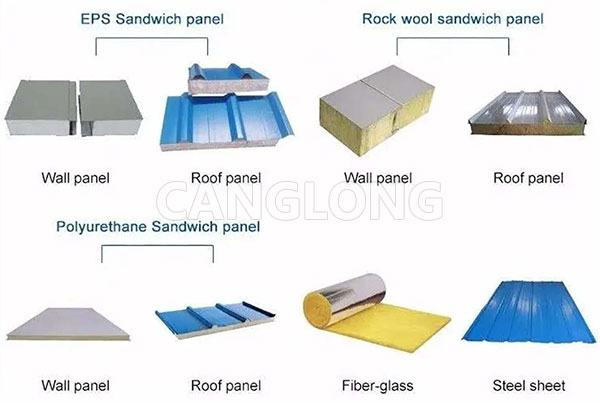
Today, when choosing sandwich panels, customers are no longer just concerned with “how much per square meter?”.
But rather:
How is the insulation performance? Does the fire resistance rating meet requirements? Is it suitable for the local climate? How long can it be used? Is installation convenient? Is the overall project cost controllable?
Different building needs correspond to different sandwich panel solutions. Currently, the four most common types on the market—EPS sandwich panels, PU sandwich panels, PIR sandwich panels, and rock wool sandwich panels—do not have an absolutely best option.
The truly important thing is: Which one is best suited for your project?
EPS Sandwich Panels: An Economical Choice for Projects with Limited Budgets
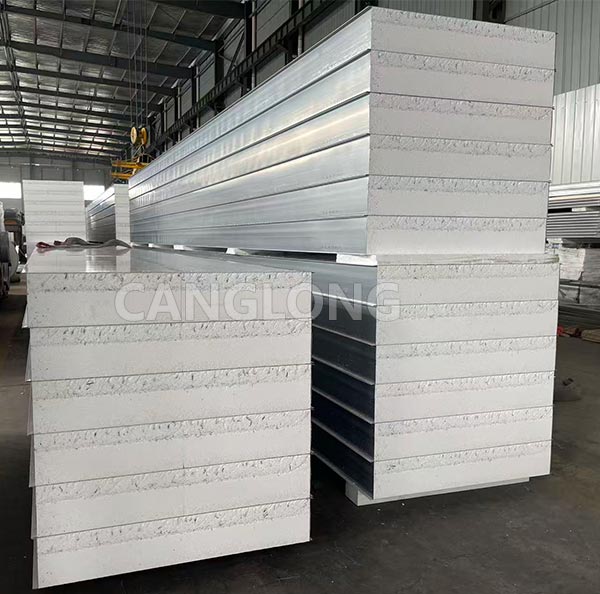
If your project prioritizes initial investment costs and rapid construction, EPS sandwich panels are a worthwhile option.
EPS core material is lightweight, easy to install, and has a relatively low overall cost, making it widely used in:
- General industrial plants
- Agricultural buildings
- Temporary buildings
- Warehouses
- Simple workshops
- Budget-sensitive projects
For buildings with relatively low requirements for insulation and fire resistance, EPS sandwich panels can achieve rapid enclosure construction while controlling costs.
Who is it suitable for?
Users seeking economy, short construction periods, and relatively basic building performance requirements.
However, it’s important to note that different countries and regions have different standards for building fire resistance; these should be confirmed according to local regulations and the building’s intended use before selecting a panel.
PU Sandwich Panels: The First Choice for Customers Seeking High-Efficiency Insulation
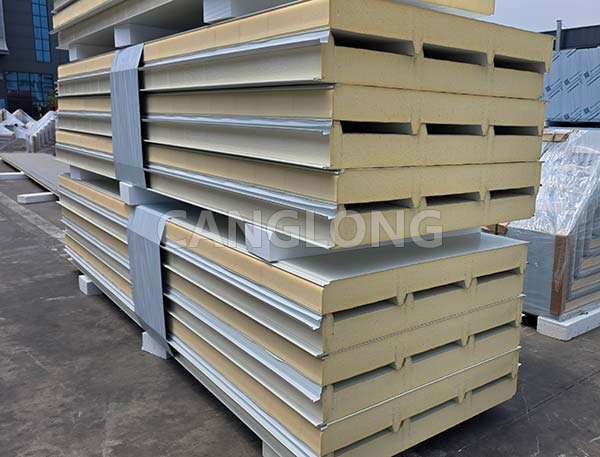
If your building requires better insulation and heat insulation performance, polyurethane sandwich panels are typically a higher-performance option.
PU core material has low thermal conductivity, allowing for better insulation performance with relatively thinner panels while meeting the same insulation requirements.
Therefore, it is particularly suitable for:
- Cold storage
- Food processing plants
- Pharmaceutical warehousing
- Temperature-controlled workshops
- Industrial buildings in high-temperature areas
- Energy-sensitive buildings
With the increasing emphasis on building energy efficiency, building envelope systems directly impact long-term operating costs. A building may only be constructed once, but its air conditioning, refrigeration, and heating systems may need to operate for ten or even twenty years or more. Choosing a higher-performance insulation system means focusing not only on the purchase price but also on the energy costs throughout the building’s lifecycle.
Who is it suitable for?
Cold chain enterprises, food processing enterprises, and industrial users looking to reduce long-term energy consumption.
PIR Sandwich Panels: Finding a Higher Balance Between Insulation and Fire Resistance
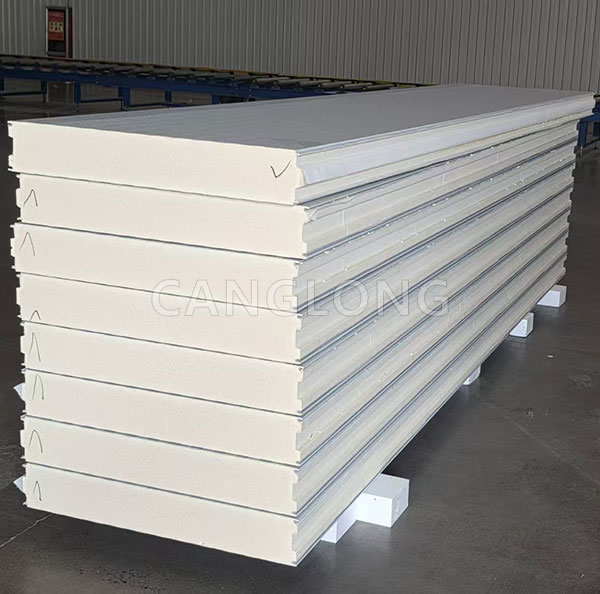
As building regulations and fire safety requirements continue to tighten, PIR sandwich panels are attracting increasing attention from industrial and commercial building projects. PIR (Polyurethane Insulated) can be seen as a high-performance insulation core material further developed from polyurethane systems. While maintaining good insulation performance, it offers superior fire resistance.
Therefore, PIR sandwich panels are suitable for:
- High-standard industrial plants
- Commercial buildings
- Data centers
- High-end warehousing
- Production workshops with high fire safety requirements
- International engineering projects
For export projects, building codes vary significantly across countries.
More and more customers are focusing on:
- Does the building material meet local fire safety regulations?
- Is third-party testing required?
- Are there any risks associated with project acceptance?
Therefore, the value of PIR sandwich panels lies not only in the material itself but also in how they help improve building performance.
Who is it suitable for?
Customers who value both insulation performance and have higher requirements for fire resistance and building standards.
Rock Wool Sandwich Panels: When Fire Resistance is the Primary Consideration
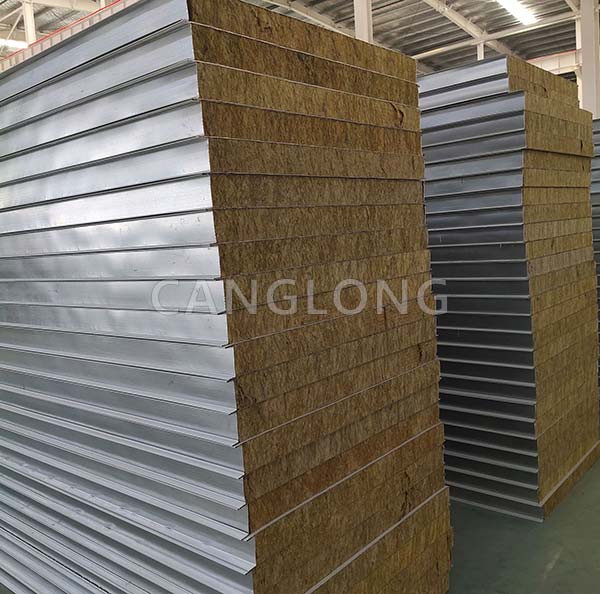
If your project prioritizes fire resistance, then rock wool sandwich panels are often an important choice.
Rock wool is an inorganic material with excellent high-temperature resistance, making it widely used in building projects with high fire safety requirements.
Typical applications include:
- Industrial plants
- Chemical workshops
- Public buildings
- Commercial complexes
- Warehouses with high fire safety requirements
- High-risk industrial production environments
For these types of buildings, material selection not only affects building performance but also directly impacts project approval, insurance, and long-term operational risks. From an investment perspective, rock wool sandwich panels typically require a comprehensive evaluation considering fire resistance, insulation requirements, panel weight, and overall cost.
Who is it suitable for?
Users with high fire resistance requirements or where local building codes have strict fire safety regulations.
How to choose among the four types of sandwich panels?
| Product Type | Key Advantages | Typical Applications | Main Consideration |
|---|---|---|---|
| EPS | Cost-effective, lightweight, fast installation | Standard factories, warehouses, agricultural buildings | Budget control |
| PU | Excellent thermal insulation and energy efficiency | Cold storage, food processing plants, temperature-controlled buildings | Energy efficiency |
| PIR | Balanced thermal insulation and fire performance | High-standard industrial and commercial buildings | Overall performance |
| Rock Wool | Excellent fire resistance | Industrial facilities, public buildings, projects with high fire-safety requirements | Fire safety |
It’s important to emphasize that no single sandwich panel can meet all project needs.
The correct choice should be based on:
Building purpose + local climate + fire safety requirements + insulation requirements + project budget + local building codes.
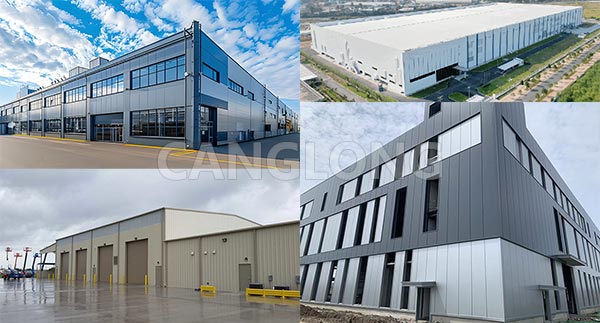
From Low-Priced Materials to High-Performance Systems
In the past, many construction projects only compared unit prices when purchasing building envelope materials. Today, however, more and more customers are calculating the total cost of the entire project.
For example: cheaper panels ≠ lower total cost.
If the material installation is complex, requires frequent maintenance, or insufficient insulation leads to increased long-term energy consumption, the initial cost savings may be recouped during later operation.
Therefore, future competition in the sandwich panel market will not just be about who has the lowest price.
But rather:
- Who can provide materials more suitable for the project?
- Who can meet local building codes?
- Who can help customers reduce installation and operating costs?
- Who can provide a complete building envelope system?
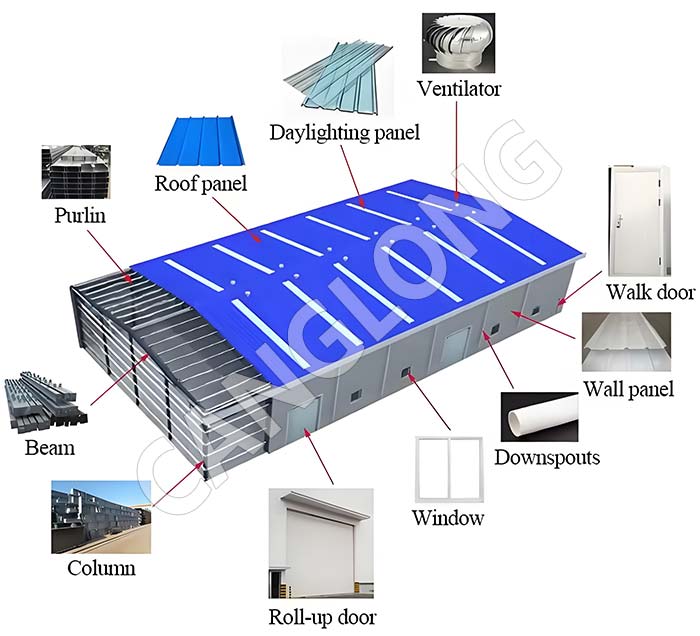
From Selling a Single Panel to Providing Complete Building Solutions
For users, the real complexity often lies not in purchasing sandwich panels, but in matching the sandwich panels with the entire building system.
A complete project may also require:
- Steel structure
- Roofing system
- Wall system
- Doors and windows
- Gutters
- Drainage system
- Lighting system
- Ventilation system
- Connectors and accessories
Therefore, the future development direction of sandwich panels will gradually shift from single products to systematic solutions. Customers don’t need simply 1000 square meters of panels, but a building envelope system that can be quickly installed, meets building performance requirements, and can be used stably for a long time.
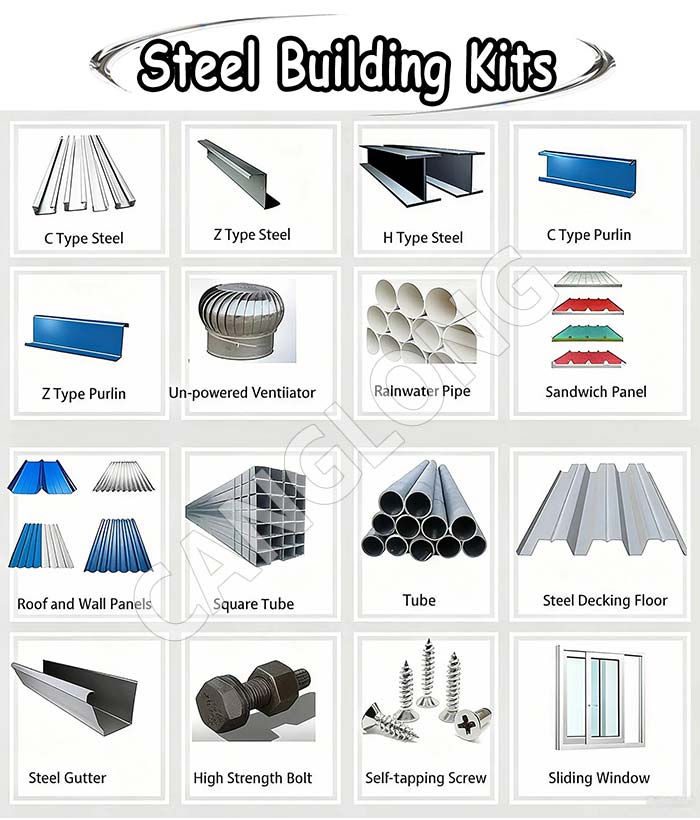
Conclusion
The best sandwich panels are not the most expensive, but the most suitable for your needs. EPS, PU, PIR, and rock wool—each product has its own advantages and application scenarios.
- If you are concerned about cost, you can choose a more economical solution.
- If you need more efficient thermal insulation performance, you can consider PU or PIR systems.
- If fire resistance is a core requirement of the project, rock wool sandwich panels may be more suitable.
Truly professional building solutions do not recommend the same product to all customers, but rather match the appropriate materials for customers based on different countries, climates, and building uses.
- From standard industrial plants to food processing plants;
- From warehousing and logistics centers to cold storage projects;
- From affordable buildings to high-standard industrial facilities;
EPS, PU, PIR, and rock wool sandwich panels cater to diverse building needs. Choosing the right material means choosing a more reliable future for your buildings.