
Fire resistance rating of metal sandwich panels
In modern industrial buildings and cold chain logistics, the choice of metal sandwich panels directly determines the building’s safety baseline. For users, understanding the fire ratings of different core materials is not only about complying with local regulations but also about protecting assets and lives.
The following is an in-depth analysis of the fire resistance performance of mainstream sandwich panels.
The fire resistance of sandwich panels mainly depends on the insulating core material. According to internationally accepted standards (such as European EN 13501-1 or Chinese GB8624), materials are usually classified as Class A (non-combustible), Class B1 (flame-retardant), or Class B2 (combustible).
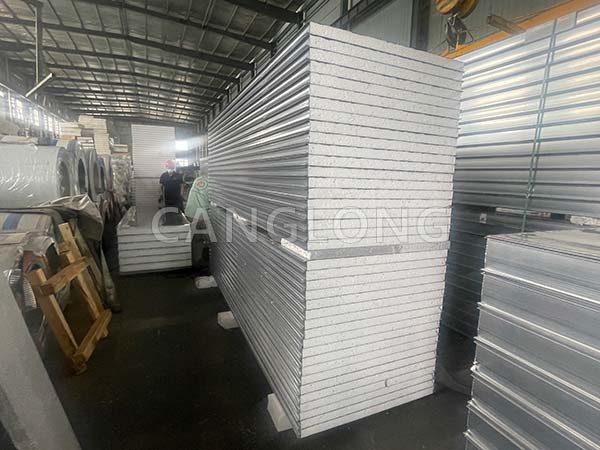
1. EPS (Polystyrene) Sandwich Panels
Fire Rating: Class B2 (standard) or Class B1 (with added flame retardants).
Fire Characteristics: EPS is an organic foam material. Although adding flame retardants can achieve flame-retardant standards, its melting point is relatively low. Under high-temperature flames, the core material will shrink and drip.
Suitable Scenarios: Temporary buildings or general transitional warehouses with low fire safety requirements.
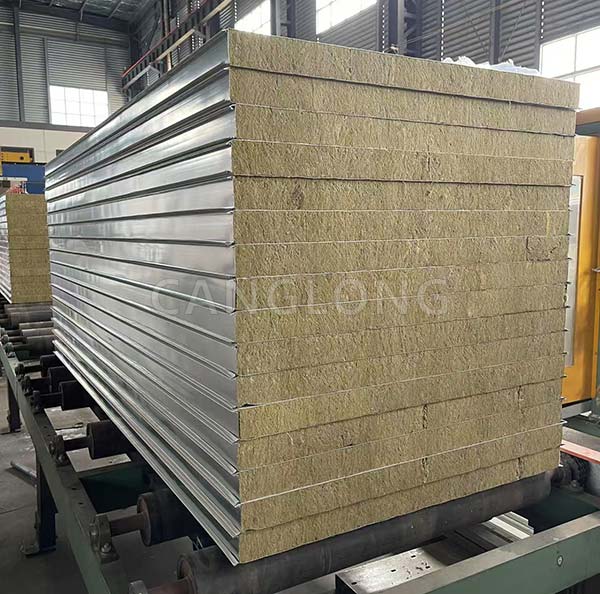
2. Rock Wool Sandwich Panels
Fire Rating: Class A (non-combustible).
Fire Characteristics: Made from natural rock melted into fibers at high temperatures. Rock wool itself is an inorganic material with an extremely high melting point (typically exceeding 1000°C). It is completely non-combustible and provides long-term structural support during a fire, effectively blocking the spread of fire.
Applicable Scenarios: Fire-resistant partition walls, paint shops, densely populated factories, and other places with extremely high fire resistance requirements.
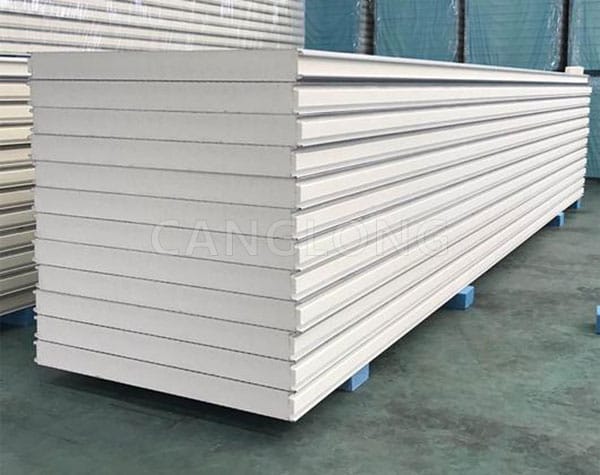
3. PU/PIR (Polyurethane/Polyisocyanurate) Sandwich Panels
Fire Rating: PU is B2/B1; PIR can reach B1.
Fire Characteristics:
- PU: Traditional polyurethane, with moderate fire resistance.
- PIR: An upgraded version of PU. Its molecular structure is more stable, and when exposed to fire, a carbonized protective layer forms on the surface, effectively blocking the spread of flames and preventing molten dripping.
Advantages: Combines excellent thermal insulation performance with good fire resistance and flame retardancy, making it the first choice for cold storage and high-end factories.
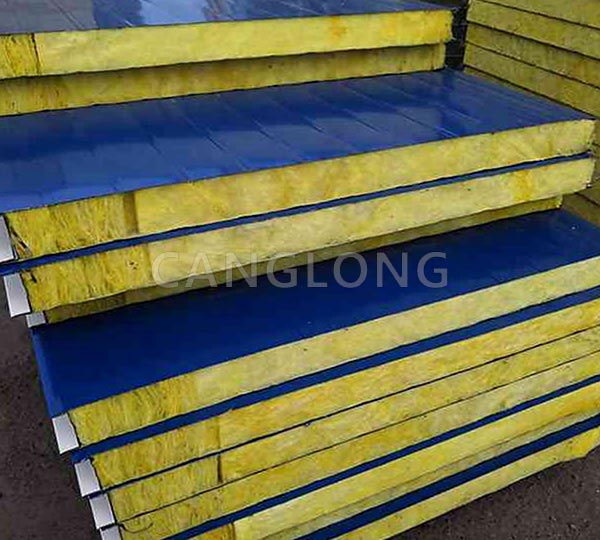
4. Glass Wool Sandwich Panel
Fire Rating: Class A (non-combustible).
Fire Characteristics: Similar to rock wool, it is an inorganic fiber, non-combustible and does not produce toxic fumes.
Advantages: Compared to rock wool, glass wool fibers are finer and longer, lighter, and have higher tensile strength. While providing Class A fire resistance, it also has excellent sound absorption properties.

5. Polyurethane Edge-Sealed Rock Wool Sandwich Panel
Fire Rating: Overall Class A.
Design Evolution: This is an innovative composite solution. The main core material uses Class A rock wool to ensure fire resistance, while the tongue and groove joints on the sides of the panel are filled with PU (polyurethane).
Key Pain Points Addressed: Rock wool is prone to water absorption, and its joints have relatively weak airtightness. Polyurethane edge sealing utilizes its excellent hydrophobicity to protect the rock wool from moisture while significantly enhancing the sealing and structural strength of the panel joints, making it a star product for high-performance industrial buildings.
Core Parameter Comparison Table
| Core Material | Fire Rating | Key Advantages | Fire Protection Logic |
| EPS | B2 / B1 | Ultra-lightweight, lowest cost | Relies on flame retardants to slow combustion |
| PIR | B1 | Superior insulation, high strength | Carbonizes upon fire contact; no melting droplets |
| Rock Wool | A | Non-combustible, ultra-high temp resistance | Mineral-based material; inherently non-flammable |
| Glass Wool | A | Fireproof, lightweight, acoustic insulation | Inorganic fibers; physical fire barrier |
| PU-Edge Rock Wool | A | Fireproof, airtight, waterproof | Grade A fire protection + PU high-performance sealing |
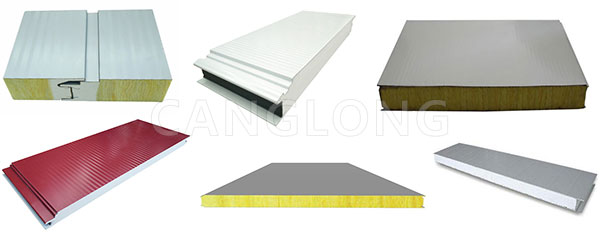
Canglong Group Matches the Optimal Fire Protection Solution for You
At Canglong Group, we not only produce panels but also provide professional advice based on our clients’ industry attributes and local fire regulations:
- Cold Chain Logistics: We recommend PIR sandwich panels, ensuring energy efficiency while providing reliable B1-level flame retardancy.
- Chemical/Processing Plants: We recommend using Class A rock wool or polyurethane-sealed rock wool panels to ensure structural safety under extreme conditions.
- High-Standard Export Packaging: Regardless of the grade of panels you choose, Canglong provides exclusive moisture-proof and impact-resistant packaging to ensure the core material’s performance remains perfect upon arrival in the United States, Chile, Benin, or anywhere in the world.
Do you need to customize your production plan according to the fire safety certification standards (such as FM, ASTM, or CE) of your country?