
What are the advantages of using glass wool wall panels in warehouses?
With the rapid development of the logistics and warehousing industry, warehouses, as core nodes in the supply chain, face increasingly stringent requirements for building materials. They must meet functional requirements such as insulation, fire resistance, and durability, while also being economical and sustainable. Glass wool wall panels, with their unique properties, are becoming the preferred solution for warehouse construction.
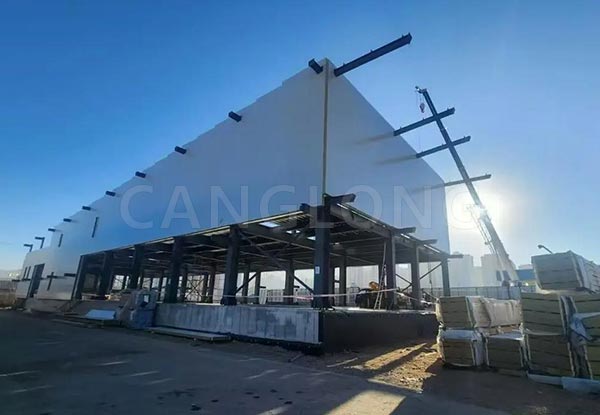
Warehouses Need More Suitable Materials
Currently, warehouse construction faces three major challenges:
- High Energy Costs: High demand for heating in winter and cooling in summer in Europe and America means that traditional wall insulation is insufficient, leading to energy waste.
- Strict Safety Regulations: EU EN 13501 and US NFPA regulations have strict requirements for warehouse fire resistance ratings, typically requiring Class A non-combustible materials.
- Tight Construction Cycles: The explosive growth of e-commerce necessitates rapid warehouse delivery to seize market share, while traditional building materials have long construction cycles.
The design of glass wool wall panels precisely addresses these needs.
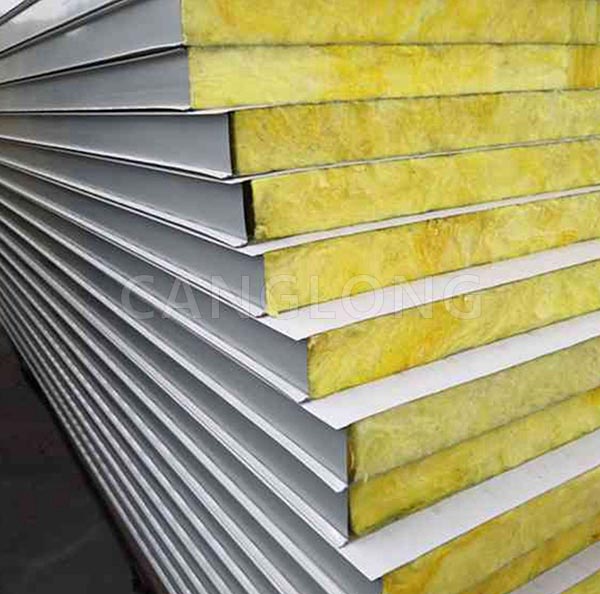
Core Advantages of Glass Wool Wall Panels
1. Superior Insulation, Directly Reducing Operating Costs
The porous fiber structure of fiberglass wool effectively blocks air convection, with a thermal conductivity as low as 0.032-0.040 W/(m·K), essentially giving the warehouse a “temperature-controlled coat.” Actual test data shows that warehouses using glass wool sandwich panels can reduce winter heating energy consumption by 30%-40% and summer cooling load by more than 25%. For overseas regions with high electricity/gas prices, this translates to tens of thousands of dollars in cost savings annually.
2. Class A Fire Resistance, Compliant and Safe
Fiberglass wool itself is an inorganic material, non-flammable and does not release toxic gases, achieving a fire resistance rating of Class A (equivalent to EU Class A1 and US ASTM E84 Class A). This is crucial for warehouses storing flammable goods. It not only passes local fire safety inspections but also minimizes fire risks, complying with stringent overseas warehousing safety regulations.
3. Lightweight and Modular Design Accelerates Project Implementation
Compared to traditional brick-and-mortar or concrete walls, glass wool wall panels weigh only 1/5 to 1/10, significantly reducing the structural load and eliminating the need for additional foundation reinforcement. Furthermore, their modular design supports factory prefabrication and on-site assembly, allowing for the installation of hundreds of square meters per day, more than 50% faster than traditional construction methods. For overseas temporary warehouses or expansion projects requiring rapid deployment, this advantage significantly shortens the return on investment cycle.
4. Low Life-Cycle Cost and Outstanding Cost-Effectiveness
Although the initial procurement cost is slightly higher than ordinary color steel plates, their durability reduces the frequency of later maintenance. The long-term energy savings from insulation performance, combined with the structural cost savings from lightweight design, result in a 20%-30% reduction in total cost over a 10-year lifespan. This is a key decision-making factor for overseas warehousing companies seeking long-term returns.
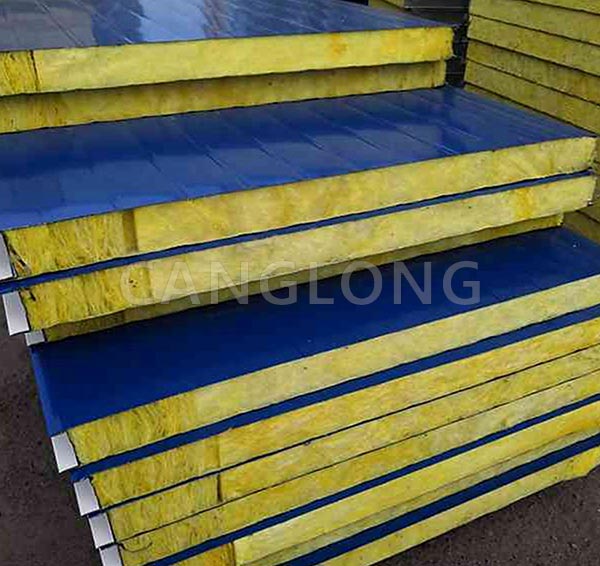
Adaptable to Diverse Scenarios, Covering Global Needs
Whether in the extreme cold of Nordic warehouses, the high temperatures of Middle Eastern storage, or the high humidity of Southeast Asia, glass wool sandwich wall panels perform exceptionally well:
- Low-temperature regions: Combined with exterior finishes, they can withstand extreme weather conditions down to -40℃, preventing condensation on the walls.
- High-temperature regions: Reflective surface treatment reflects over 60% of solar radiation, reducing indoor temperature rise.
- High-humidity areas: Water-repellent products (moisture absorption rate <0.5%) prevent mold growth and extend service life.
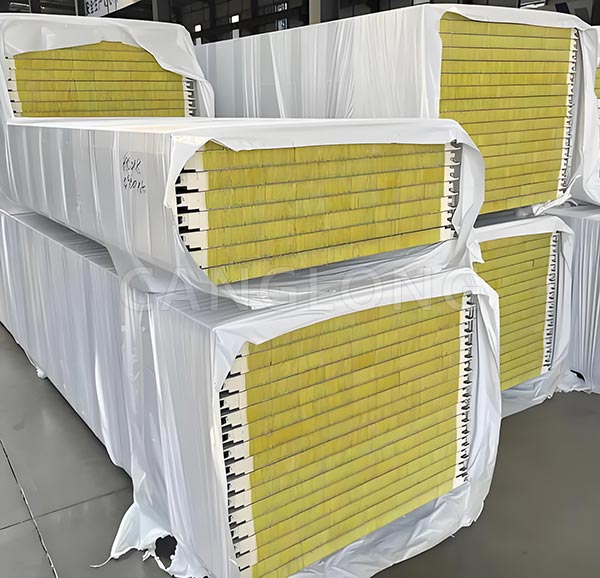
Conclusion
In the wave of warehouse upgrades focused on cost reduction, efficiency improvement, and compliance, glass wool wall panels with their combined advantages of insulation, fire resistance, quick installation, and cost-effectiveness, have become the preferred material for warehouse construction. For companies planning to build or renovate warehouses, choosing them is not only a material upgrade but also an investment in long-term operational efficiency.