
Warehouse roof panels selection guide
In the humid and rainy Southeast Asia, or in desert regions with huge temperature differences, the choice of roof panels directly determines the operating costs of a durable and worry-free warehouse for decades to come.
Recently, our warehouse project in the Philippines is under construction, and many clients have been asking, “Why are more and more warehouses choosing sandwich panels instead of single-layer corrugated steel sheets?”
Today, we’ll delve into the logic behind warehouse roofing material selection to see which solution truly offers the “king of cost-effectiveness.”
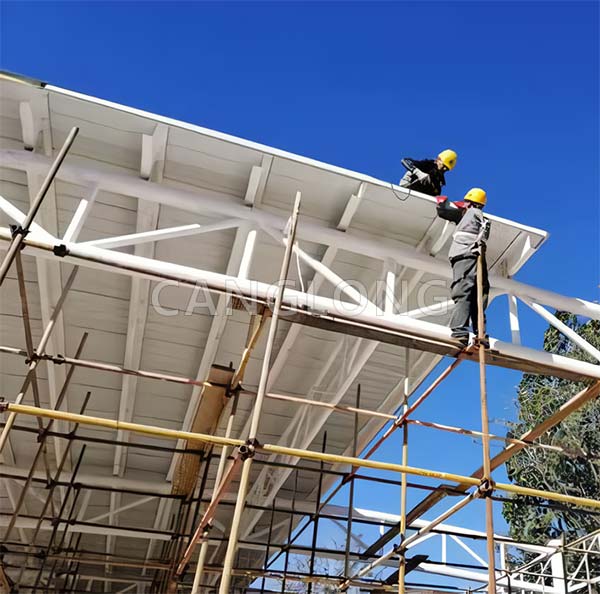
Round One: Single-Layer Corrugated Steel Sheets
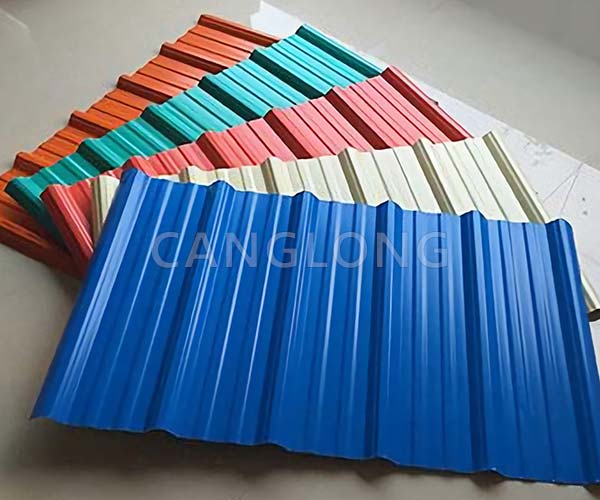
Corrugated steel sheets (referring to single-layer profiled steel sheets) are the most common material for traditional warehouses.
Advantages: Inexpensive, lightweight, fast construction, good waterproofing, and some impact resistance.
Disadvantages:
- Cold in winter and hot in summer: Metal conducts heat quickly; under the sun, the warehouse becomes a sauna; in winter, it’s as cold as an icebox.
- Condensation Issues: When there is a large temperature difference between indoors and outdoors, condensation easily forms on the bottom of the steel plates. Water droplets falling from these plates can damage goods or corrode the internal structure.
- Poor Sound Insulation: When it rains, the noise of raindrops hitting the steel plates is like drumming, severely impacting the internal office or work environment.
- Conclusion: For temporary buildings or storage sheds where temperature is not critical, single-layer color steel plates remain a low-cost option.
Round Two: Sandwich Panels
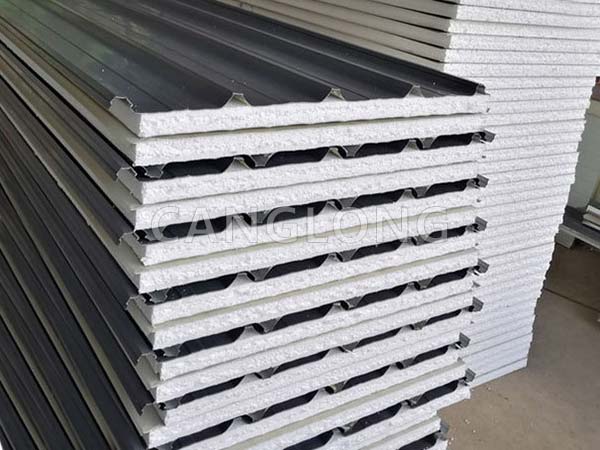
Sandwich panels can be understood as a “sandwich”: two layers of metal panels with a core material sandwiched in between. Currently, EPS sandwich panels and rock wool sandwich panels are the two major players in mainstream warehouse solutions.
1. EPS Sandwich Panels (Foam Sandwich Panels)
Core Advantages: Thermal insulation. Like putting a “down jacket” on the warehouse, it effectively blocks external heat, significantly reducing warehouse energy consumption. We chose this type of panel for our warehouse project in the Philippines, as it is very suitable for the local hot climate.
Advantages: Lightweight, moderately priced, provides some cushioning, and has good airtightness, making it dustproof and moisture-proof.
Disadvantages: Relatively weak fire resistance (B2 grade), unsuitable for high-risk factories with open flame operations.
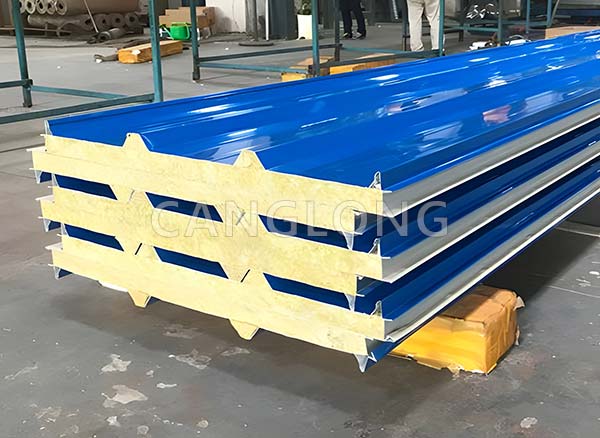
2. Rock Wool Sandwich Panels
Core Advantages: Fireproof and moisture-proof. Rock wool is a Class A non-combustible material, resistant to high temperatures, and has a high melting point.
Advantages: Excellent sound insulation and strong corrosion resistance.
Disadvantages: More expensive than EPS boards, and heavier, requiring higher load-bearing capacity from the steel structure.
How do industry veterans choose?
Based on different application scenarios, industry experts make the following decisions:
- General logistics/warehousing warehouses: EPS sandwich panels are the first choice. This is because it perfectly balances insulation, cost, and durability. Especially for tropical countries like the Philippines, solving the insulation problem is the biggest pain point in warehouse operations.
- Factories/cold storage facilities with fire protection requirements: Rock wool sandwich panels are the first choice. Safety first. Although the cost is slightly higher, it avoids significant fire risks.
- Extreme budget project: Single-layer color steel plate (ventilation openings required for cooling).
Why choose Canglong Group?
Understanding material differences is only the first step. The biggest headache for global buyers is often: “How do I procure all these materials? How do I guarantee quality?”
This is why we consistently recommend Canglong Group’s sandwich panel solutions to our clients in global projects.
1. Professionally Matched to the Scenario
Targeting the high temperature, heavy rainfall, and strong sunlight of our clients in the Philippines, Canglong Group’s EPS sandwich panels have an excellent closed-cell ratio, effectively reflecting ultraviolet rays and ensuring the warehouse interior temperature is 5-8°C lower than the outside temperature, greatly improving the working environment for workers.
2. Complete Supply Chain Support
They provide more than just panels. Like the warehouse we are building in the Philippines, from H-beams and C-beams to EPS sandwich panel wall panels and roof panels, and then to matching doors, windows, drainage pipes, and gutters, Canglong Group provides complete supporting services. This “packaged” service has increased our overseas construction efficiency by 30%, and we don’t need to worry about incompatibility issues between products from different manufacturers.
3. Quality and Aesthetics Combined
Modern industrial buildings not only require practicality but also aesthetics. Canglong’s sandwich panels have high flatness and uniform color, resulting in warehouses with strong lines and a high-quality feel, greatly enhancing the owner’s corporate image.
Conclusion
Building a warehouse is not a one-off transaction; choosing the right roof means choosing peace of mind for decades to come.
If you are struggling to choose warehouse roofing materials, consider moving beyond simple material comparisons and seeking out manufacturers like Canglong Group that provide professional sandwich panel solutions. Start with a good roofing panel, ensuring your warehouse can withstand scorching sun and torrential rain, and better protect every item inside.