
Can polystyrene composite wall panels be used for partitions in s?
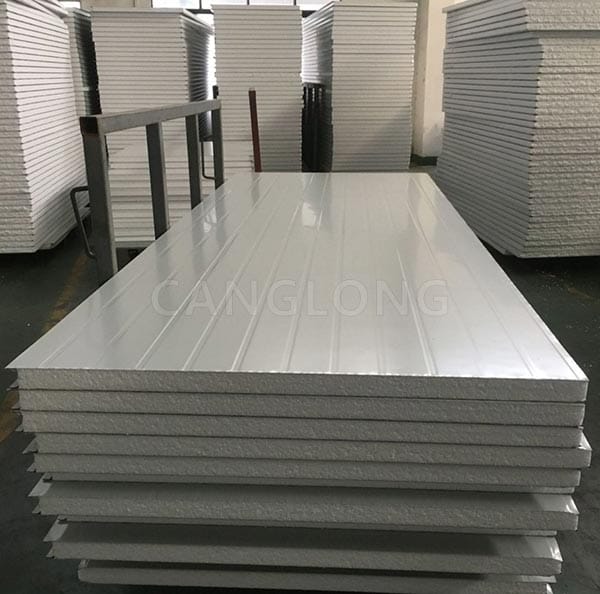
In modern livestock farming, partition design needs to consider three core requirements: environmental control, hygiene and safety, and cost efficiency. Polystyrene composite wall panels, with their unique properties, are becoming a new partition material option for an increasing number of livestock farms.
Why are they suitable for livestock farms?
Superior Insulation, Easier Temperature Control
Polystyrene is a highly efficient thermal insulation material with a thermal conductivity as low as 0.03-0.04 W/m·K. When combined with materials such as corrugated steel and cement, it can effectively block temperature differences between the inside and outside. Whether for winter insulation or summer heat protection, it can reduce energy consumption of heating/ventilation equipment and lower farming costs. For example, in broiler houses, it can stably maintain a suitable temperature of 25-30℃, improving survival rates.
Moisture-proof and Adaptable to Complex Environments
Polystyrene has a dense molecular structure and absorbs almost no water (water absorption rate <0.5%). After surface coating treatment, it becomes even more moisture-resistant. Livestock farms often experience high humidity due to cleaning and animal excrement. Traditional brick walls are prone to dampness and mold, while composite wall panels avoid these problems and reduce bacterial growth.
Easy to clean, hygienic without blind spots
The panel surface is smooth and flat, without cracks or pores. Routine cleaning with a high-pressure water gun or wiping with disinfectant is sufficient, preventing dirt and grime buildup. Compared to wood (prone to decay) and ordinary color steel (prone to rust), it has stronger resistance to chemical corrosion and maintains hygienic standards even after long-term use.
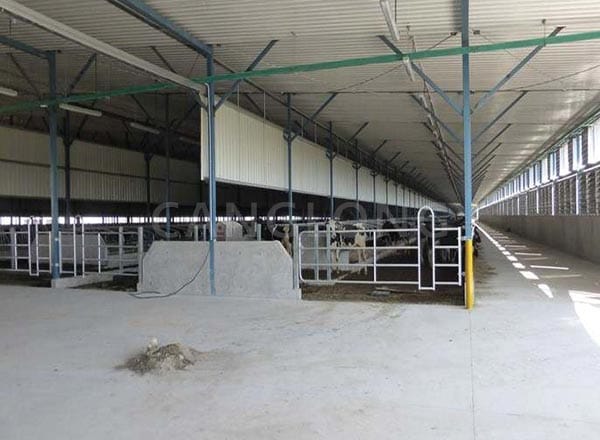
Lightweight and quick to install, reducing construction costs
A single panel weighs only 8-15 kg/㎡, making transportation and installation more convenient. No complicated tools are required, reducing labor costs by more than 30%. Custom sizes can also be cut to flexibly adapt to the partition needs of different areas.
What should be noted?
Impact resistance: If raising large animals (such as cattle or pigs), thicker or reinforced composite panels should be selected to prevent damage from animal impacts.
Fire Rating: Ordinary polystyrene is flammable; composite panels with added flame retardants (B1 grade) must be selected to comply with local fire safety regulations.
Environmental Protection: Recyclable materials are preferred for easier waste disposal, some products are reusable.
Summary
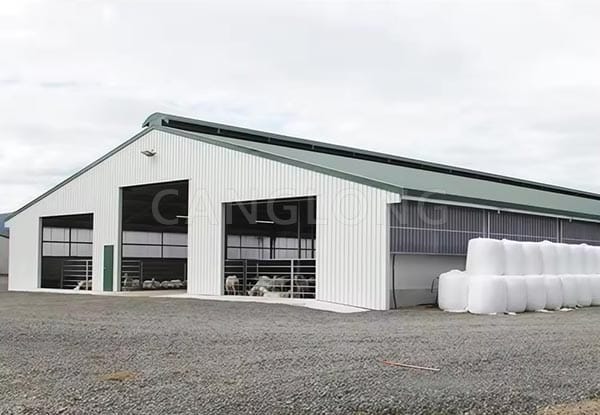
For most small and medium-sized farms (such as chicken coops, rabbit hutches, and small pig farms), polystyrene composite wall panels are a cost-effective choice, especially suitable for scenarios with high requirements for temperature control and hygiene. For large-scale farms or farms involving large animals, it is recommended to choose reinforced versions based on specific needs (such as impact resistance and fire resistance) and consult a professional team for design and installation.