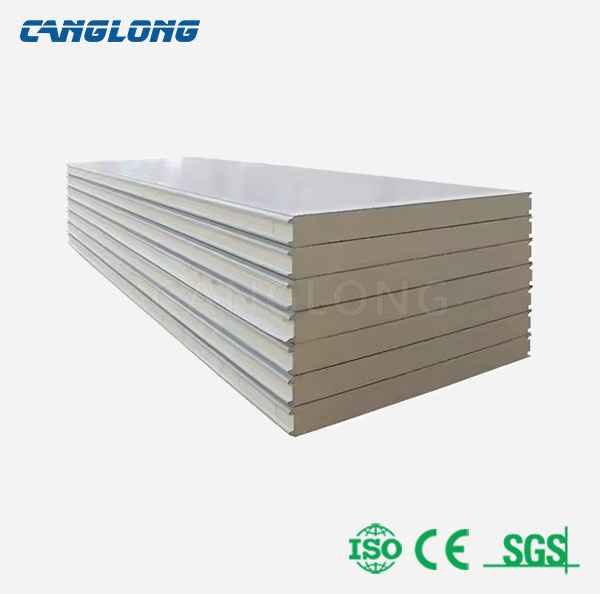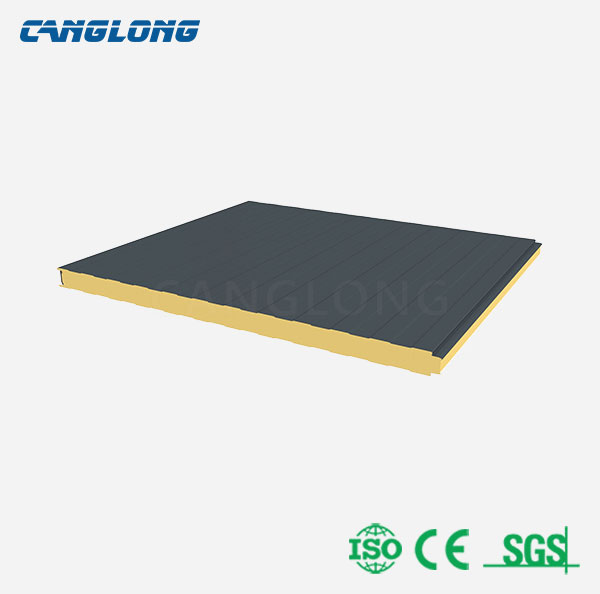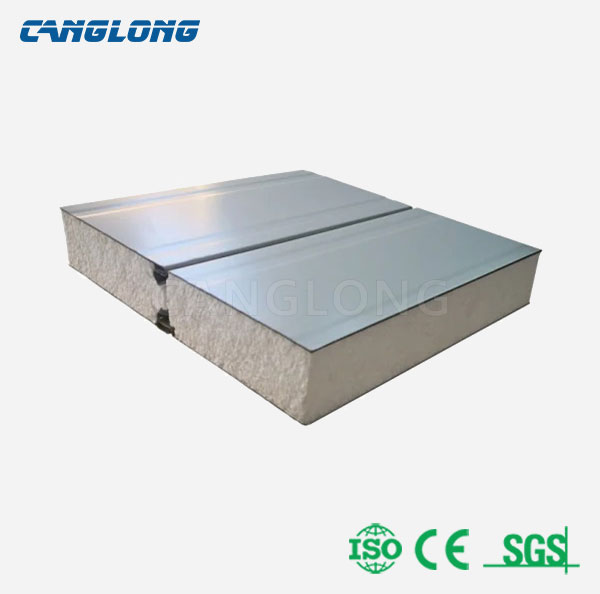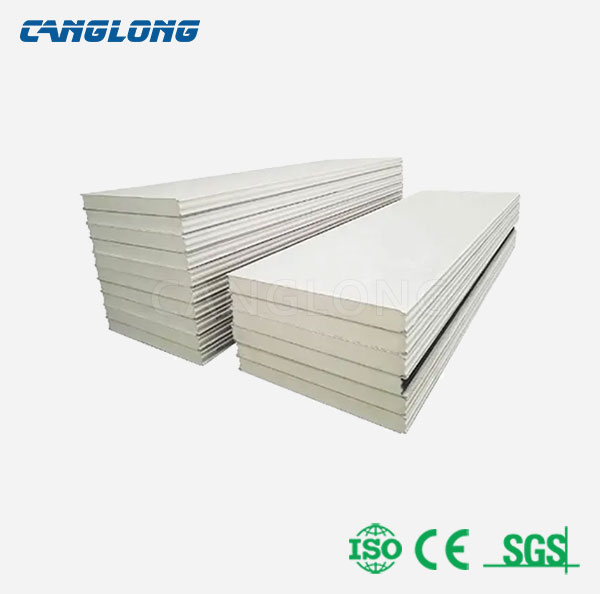
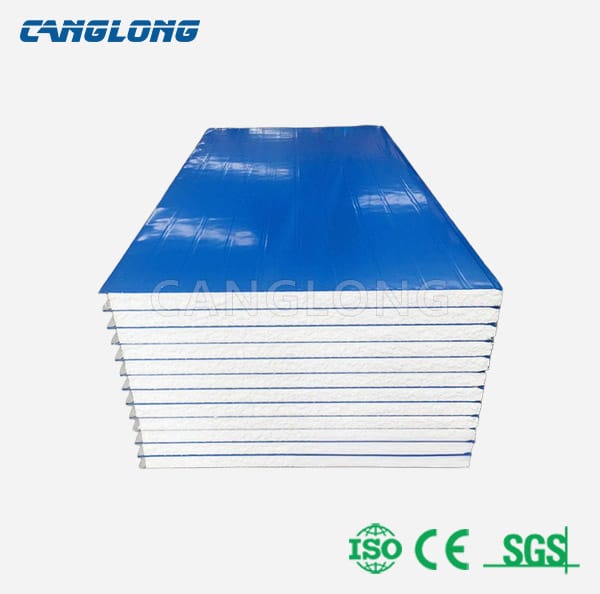
Polystyrene Foam Sandwich Panel
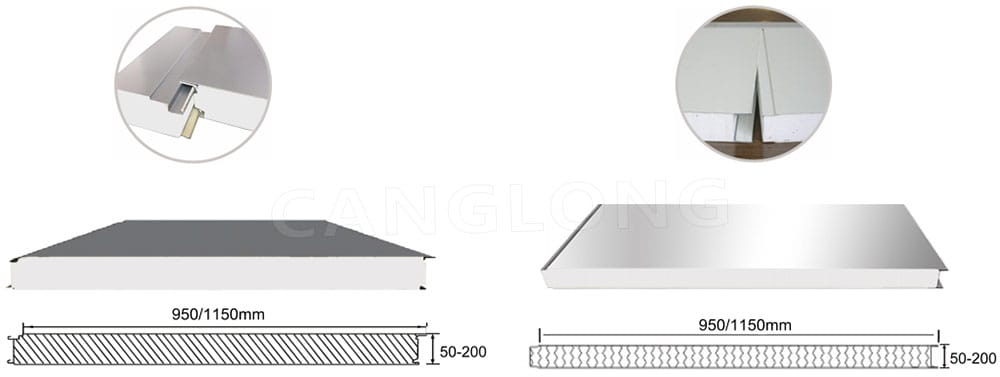
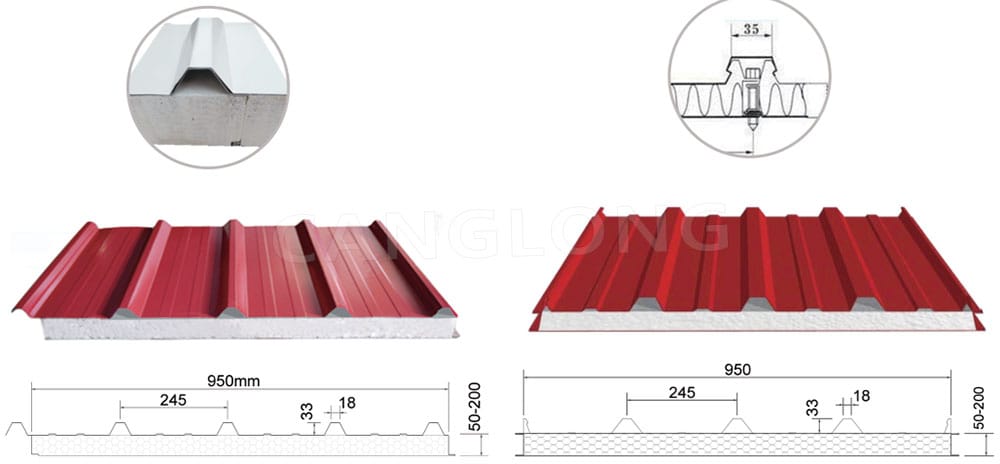
- Effective Width: 950/1150mm
- Metal Sheet Thickness: 0.2mm to 0.8mm
- Coating: PE/HDP/PVDF/SMF
- Plating: Hot-galvanize/Aluminium/Stainless
- Color of Steel Plate: White/Offwhite/Blue or Customized
- Core Material: Polystyrene (EPS)
- Core Thickness: 50/75/100/150/200mm
- Delivery Time: 7-15 days
- Shipping Port: Qingdao Port
- Payment: T/T, L/C, PayPal
- Service Life: ≥15 years
- Product Origin: Henan, China
Product Details
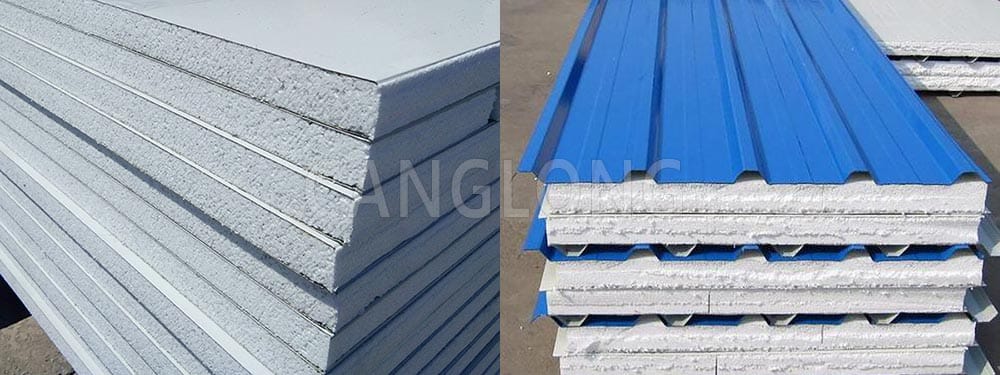
Polystyrene foam sandwich panel is lightweight composite panels with polystyrene foam (EPS/XPS) as the core material and a metal sheet as the facing layer. With their excellent thermal insulation performance, extremely light weight, and high cost-effectiveness, they have become a common choice for building envelopes in cost-sensitive environments with less stringent fire safety requirements.
Core Characteristics and Advantages
Superior Thermal Insulation and Economy
Polystyrene foam has an extremely low thermal conductivity, resulting in excellent insulation performance. Its relatively low raw material and manufacturing costs give it a significant price advantage among many insulation materials, making it an ideal choice for controlling initial investment budgets.
Extremely Lightweight and Easy to Install
The low density of the core material makes the finished panels extremely lightweight. This significantly reduces the load on the building structure and foundation, while making transportation, handling, and installation more convenient and efficient, effectively saving labor and machinery costs.
Excellent compressive strength and moisture resistance (especially XPS)
Extruded polystyrene (XPS) core material, in particular, has a closed-cell structure, resulting in higher compressive strength and extremely low water absorption, effectively preventing moisture penetration and maintaining stable thermal insulation performance over the long term.
Flexible installation and easy shaping
The sheets are easy to cut and can be flexibly processed into different shapes according to design requirements, suitable for various roof and wall designs. Installation is mature and simple.
Polystyrene Foam Insulation Sandwich Wall Panel – Span Table
| Non-Cyclonic Reqion A&B | Cyclonic Reqion A&B | ||
| Wind Speed (km/h) | Span (mm) | Wind Spend (km/h) | Span (mm) |
| 118.8 | 5400 | 147.6 | 3600 |
| 147.6 | 4200 | 180 | 3000 |
| 180 | 3600 | ||
Polystyrene Foam Insulation Sandwich Roof Panel – Span Table
| Thickness (mm) | Single span(mm) | Multi-span(mm) | ||||||||||||
| 1500 | 2700 | 3900 | 5100 | 6300 | 7500 | 8700 | 1500 | 2700 | 3900 | 5100 | 6300 | 7500 | 8700 | |
| 50 | 5.16 | 2.35 | 1.28 | – | – | – | – | 4.15 | 2.07 | 1.17 | – | – | – | – |
| 75 | 7.70 | 3.74 | 2.00 | 1.21 | – | – | – | 5.9 | 2.91 | 1.72 | 1.11 | – | – | – |
| 100 | 9.41 | 4.63 | 2.55 | 1.53 | 1.04 | 0.76 | – | 7.61 | 4 | 2.41 | 1.58 | 1.1 | – | – |
| 125 | 10.98 | 5.55 | 3.11 | 1.86 | 1.25 | 0.92 | – | 7.74 | 4.25 | 2.95 | 1.98 | 1.4 | 1.03 | – |
| 150 | 13.26 | 6.78 | 3.67 | 2.19 | 1.47 | 1.07 | 0.82 | 7.74 | 4.35 | 3.04 | 2.35 | 1.77 | 1.31 | – |
Important application limitations and notes
Fire resistance is a core consideration: Ordinary polystyrene foam is a combustible material. Although adding flame retardants can achieve a B1 (flame-retardant) rating, its fire resistance is far lower than that of Class A non-combustible materials such as rock wool. When exposed to fire or high temperatures, it may melt, shrink, and produce flammable drippings.
Specific application scenarios: Due to its material characteristics, it is generally not recommended for use in public buildings, densely populated areas, factories, warehouses, and areas with open flame operations where mandatory or high fire protection standards are required. Polystyrene foam sandwich panel is more suitable for temporary buildings with lower fire resistance requirements, partitions without insulation needs, simple workshops, or as an inner insulation layer.
Polystyrene foam sandwich panel is a cost-effective lightweight insulation material. When choosing one, its excellent insulation, lightweight, and economy must be weighed against its inherent fire resistance limitations. We strongly recommend that you carefully evaluate the project based on local fire regulations, building use, and safety requirements, and prioritize its use within permissible limits.
Professional Tip: For the vast majority of formal industrial and civil building projects, from a life and property safety perspective, Class A non-combustible sandwich panels or composite panels such as rock wool and glass wool are usually more reliable and recommended choices.
Sandwich Panel Production Workshop

Sandwich Panel Packing & Shipping
All the products are loaded at the loading site of our factory using crane and forklift by our skilled workers, who will prevent the goods to be damaged. And all the structure components, panels, bolts and sorts of accessories will be well packed with standard package and it is suitable for ocean transport.
Inspection: 50% inline inspection and 100% full final inspection, make sure all output w/o any mistake.
Packing: Per customer's requirements or per product sizes, full protection packing.
Shipping: Per customer's requirements or per container sizes.
Unloading: We package it as a whole and can be easily pulled out at once with a forklift, which is very convenient.

Our Certificates
Our sandwich panel certificates include EU CE certification, BPS certification, and ICC certification.

Application of Sandwich Panels
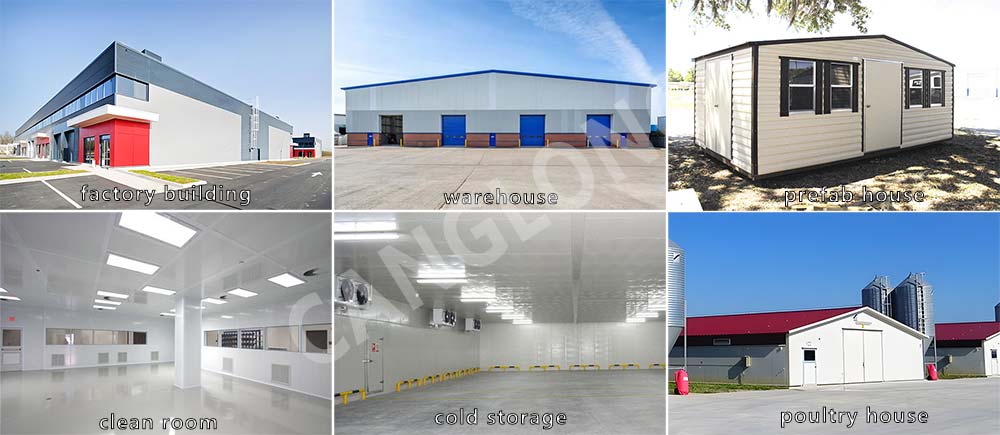
Usage scenario: Insulated sandwich panels are used as exterior walls and interior partitions, installed vertically or horizontally on single span or multi span structures. Such as industrial buildings, steel frame structures, warehouses and logistics centers, commercial buildings and offices, fire-resistant buildings, agricultural and livestock buildings, sports halls, exhibition halls, factories, garages, hangars, barns, prefabricated houses, cold storage, clean room, etc.

We provide the following RAL color card colors for your reference. For other colors, please compare the Raul color card colors.
Note: The above color card has a slight deviation due to printing reasons, please refer to the actual products.


If you purchase metal sandwich panels from Canglong Group, we will also provide some accessory products, including self tapping nails, rivets, waterproof caps, polyurethane glass glue, mouth and corner accessories, outer ridge tiles, waterproof eaves, external and internal corners, eaves edging, plugs, door and window edging, purified aluminum profiles, etc.


High-quality Raw Materials
We strictly select high-quality suppliers. All color steel coils and core materials are from China top 500 companies and have undergone strict quality inspections to ensure the basic quality of the products.
-


Advanced Production Equipment
The factory is equipped with advanced production equipment, including automated production lines, cNc cutting machines and high-precision pressing equipment, to ensure that the production process of each color steel sandwich panel is accurate and stable.
-

Mature Supply Solutions
One-stop supply of all accessories for sandwich panel installation, standardized packaging process, to avoid friction or damage of sandwich panels on the road, easy for customers to unload, saving time and money for customers.
-

Q1: What are the main applications of polyurethane sandwich panels?
A: Polyurethane sandwich panels are commonly used for insulation and construction in various building types, including residential, commercial, industrial, and agricultural structures. They are suitable for walls, roofs, ceilings, and floors.
Q2: What are the advantages of polyurethane sandwich panels?
A: Polyurethane sandwich panels offer excellent thermal insulation properties, lightweight construction, high strength-to-weight ratio, versatility, weather resistance, fire resistance (with appropriate treatments), aesthetic appeal, and cost-effectiveness.
Q3: How do polyurethane sandwich panels contribute to energy efficiency?
A: Polyurethane sandwich panels provide effective thermal insulation, reducing heat transfer through walls and roofs. This helps maintain comfortable indoor temperatures and reduces the energy required for heating and cooling, thus contributing to energy efficiency and lower utility bills.
Q4: Are polyurethane sandwich panels environmentally friendly?
A: Polyurethane sandwich panels can be environmentally friendly when produced using sustainable manufacturing practices and materials. Additionally, their energy-saving properties contribute to overall environmental sustainability by reducing energy consumption and greenhouse gas emissions.
Q5: How durable are polyurethane sandwich panels?
A: Polyurethane sandwich panels are known for their durability and resistance to various environmental factors, including weather, moisture, and corrosion. Proper installation and maintenance can further enhance their longevity.
Q6: Are polyurethane sandwich panels easy to install?
A: Yes, polyurethane sandwich panels are relatively easy to install compared to traditional building materials. Their lightweight nature and standardized dimensions facilitate quick and efficient installation, resulting in reduced construction time and labor costs.
Q7: Can polyurethane sandwich panels be customized?
A: Yes, polyurethane sandwich panels can be customized to meet specific design requirements, including color, finish, thickness, and profile. Customization options allow architects and builders to achieve desired aesthetics and performance characteristics for their projects.
Q8: How do I maintain polyurethane sandwich panels?
A: Maintenance requirements for polyurethane sandwich panels are minimal. Regular cleaning with mild detergent and water, inspection for any damage or deterioration, and prompt repair of any issues are recommended to ensure optimal performance and longevity.
Product Features
The metal sandwich panels produced by Canglong are insulated, fire-resistant, environmentally friendly, earthquake resistant, and durable.