
How to choose building wall panel in earthquake prone areas?
In earthquake-prone regions (such as Japan, Chile, and Turkey), building design must focus not only on structural safety but also on the building envelope. Choosing the right wall panel materials can effectively reduce earthquake risk, minimize damage, and improve overall building safety.
This article, based on steel structure buildings, provides a concise comparison of common metal wall panel types to help users make safer and more economical choices.
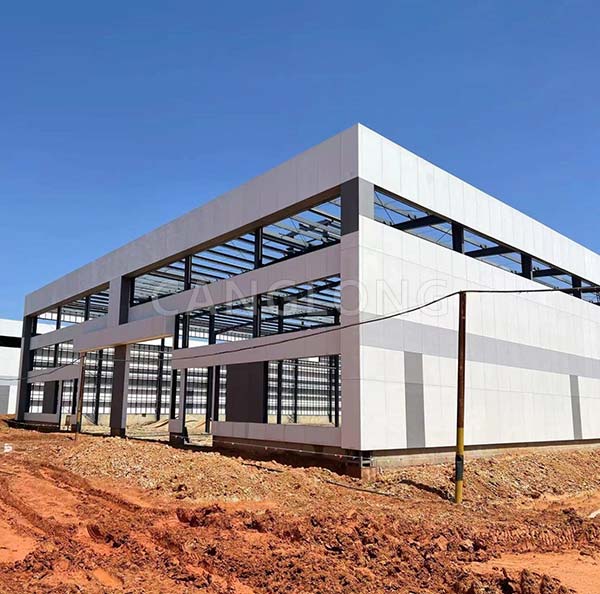
Core Principles for Wall Panel Selection in Earthquake-Prone Zones
In seismic design, wall panels are not the primary load-bearing structure, but their performance directly affects building safety:
1. Lightweight Priority
👉 The lighter the wall, the smaller the seismic force, and the safer the overall structure.
2. Reliable Connections
👉 The panels must have good connection methods to prevent them from falling off during vibrations.
3. Flexibility and Deformation Resistance
👉 Able to adapt to structural displacement and not easily cracked or damaged.
4. Fire Prevention and Safety
👉 Earthquakes can trigger fires, making fire resistance equally important.
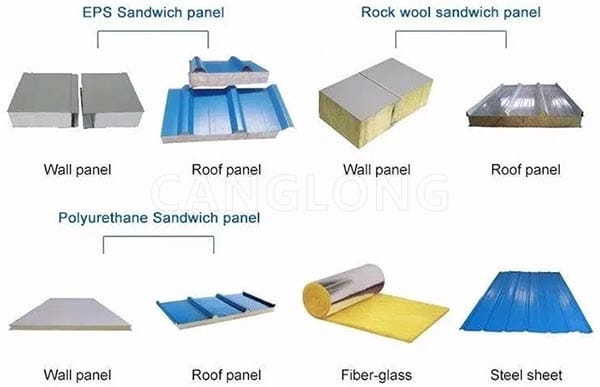
Comparative Analysis of Common Wall Panel Types
| Panel Type | Weight (Seismic Impact) | Thermal Insulation | Fire Resistance | Strength & Durability | Cost Level | Key Advantages | Limitations | Recommended Applications |
|---|---|---|---|---|---|---|---|---|
| Single-layer Steel Sheet | ⭐⭐⭐⭐⭐ (Very Light) | ⭐ (None) | ⭐⭐ | ⭐⭐ | ⭐ (Lowest) | Lowest cost, very lightweight, easy installation | No insulation, weak impact resistance | Temporary buildings, simple warehouses |
| EPS Sandwich Panel | ⭐⭐⭐⭐ (Light) | ⭐⭐⭐ | ⭐⭐ | ⭐⭐⭐ | ⭐⭐ | Cost-effective, lightweight, easy to install | Poor fire resistance, moderate strength | Standard warehouses, industrial buildings |
| PU / PIR / PUR Sandwich Panel | ⭐⭐⭐⭐ (Light) | ⭐⭐⭐⭐⭐ | ⭐⭐⭐⭐ (PIR better) | ⭐⭐⭐⭐ | ⭐⭐⭐⭐ | Excellent insulation, good strength, energy efficient | Higher cost | Cold storage, food, pharma, high-end projects |
| Rock Wool Sandwich Panel | ⭐⭐ (Heavier) | ⭐⭐⭐ | ⭐⭐⭐⭐⭐ (Non-combustible) | ⭐⭐⭐⭐ | ⭐⭐⭐ | Best fire resistance, good acoustic performance | Heavier, higher seismic load | High fire-risk buildings, chemical plants |
| Glass Wool Sandwich Panel | ⭐⭐⭐⭐ (Light) | ⭐⭐⭐⭐ | ⭐⭐⭐⭐ | ⭐⭐⭐ | ⭐⭐⭐ | Lightweight, good fire & acoustic performance, flexible | Lower structural strength than PU | Industrial buildings, logistics centers |
Recommended solutions for different needs
Based on different needs in earthquake zones, the following selection logic can be referenced:
✔ Prioritizing safety and lightweight
👉 PU/PIR sandwich panels or glass wool sandwich panels
✔ Prioritizing Fire Resistance
👉 Rock Wool Sandwich Panels (Preferred)
✔ Cost Control
👉 EPS Sandwich Panels
✔ Temporary or Simple Buildings
👉 Color Steel Single Panels
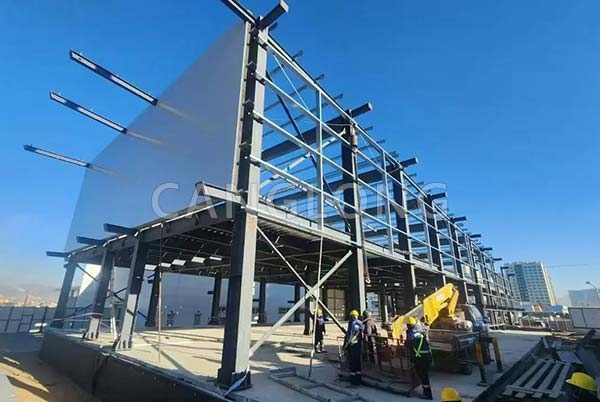
Industry Trends
Global construction is trending towards:
- Lightweight structural systems (reducing earthquake impact)
- High-performance building envelope materials (energy saving + safety)
- Prefabricated buildings (improving construction quality)
Under this trend, the demand for PU/PIR and glass wool sandwich panels continues to grow, while rock wool maintains stable application in high-standard markets.
Canglong Group’s Solutions
Canglong Group provides integrated building envelope system solutions, with even greater advantages in earthquake-prone areas:
Integrated design of structure and wall panels: reducing connection risks.
Standardized production: improving component consistency.
Professional installation guidance: ensuring seismic performance is implemented.
Global project experience: adapting to different earthquake codes.
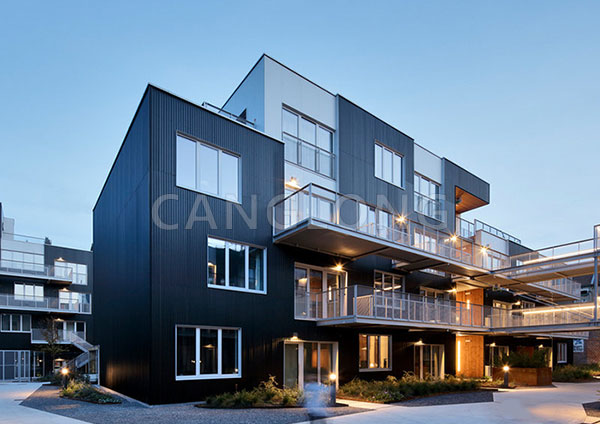
Conclusion
In earthquake-prone areas, wall panel selection is not only about cost but also directly affects building safety. Lightweight design, safety, and adaptability to project requirements are the core principles.
In summary:
- High-end projects → PU/PIR
- High-safety projects → Rock wool
- Comprehensive projects → Glass wool
- Economical projects → EPS
Choosing the right wall panel system, combined with professional steel structure solutions, is the only way to truly achieve a balance between safety, economy, and long-term stable operation.